Introduction: Gypsum vs Cement in Modern Construction
Choosing between gypsum and cement is a common decision in modern construction projects, yet many builders, architects, and contractors underestimate how different these two materials actually are. The comparison of Gypsum vs Cement goes far beyond appearance or cost and directly affects construction speed, durability, fire performance, and long-term maintenance.
Both materials play critical roles in residential, commercial, and industrial buildings. Gypsum is widely used for interior finishes, partitions, and ceilings due to its fast setting time and smooth surface quality. Cement, on the other hand, remains the backbone of structural construction, offering high strength and long-term durability under demanding conditions.
The real challenge is not choosing one material over the other blindly, but understanding the difference between gypsum and cement in specific construction applications. Using the wrong material in the wrong place can lead to cracking, moisture damage, higher costs, and performance failures over time.
In this article, we provide a practical and application-focused comparison of gypsum and cement. Instead of generic definitions, we analyze how each material performs in real construction scenarios, including wall systems, ceilings, fire resistance, durability, installation speed, and overall value. By the end, you will have a clear framework for deciding when gypsum is the better choice and when cement remains the more reliable solution.
What Is Gypsum Material Used in Construction?
Gypsum is a mineral-based construction material primarily used for interior finishing applications. In modern building projects, it is valued for its fast setting time, smooth surface quality, and ease of installation. Unlike structural materials, gypsum is mainly applied where speed, precision, and surface appearance are more important than load-bearing strength.
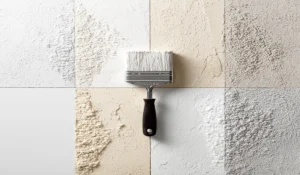
In residential and commercial buildings, gypsum is commonly used for wall finishes, ceiling systems, decorative elements, and partition walls. Gypsum plaster allows contractors to achieve a uniform and paint-ready surface without extended curing time. This is one of the main reasons gypsum plaster is often preferred over traditional cement-based finishes for interior spaces.
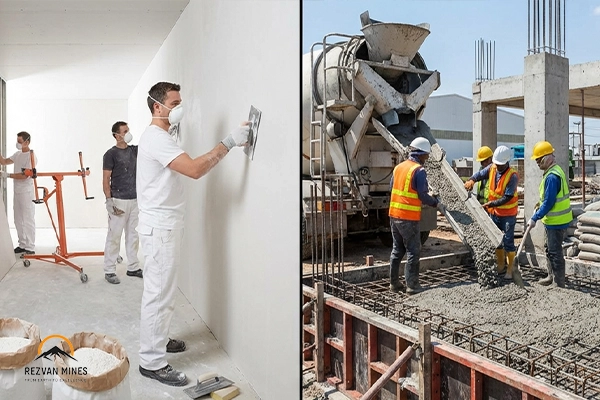
When comparing gypsum vs cement construction methods, gypsum stands out in projects with tight deadlines. The material requires minimal water, produces less on-site waste, and significantly reduces labor time. These advantages make gypsum especially attractive for large-scale housing developments and interior renovation projects.
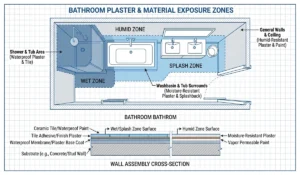
However, gypsum also has clear limitations. It is sensitive to prolonged moisture exposure and is not suitable for external or wet-area applications without additional protection. Understanding these boundaries is essential when evaluating gypsum vs cement for walls, as improper use can compromise durability and lead to surface damage.
In practice, gypsum is best viewed as a finishing and interior solution rather than a structural one. Its role complements cement-based materials rather than replacing them entirely. This functional distinction is at the core of the ongoing gypsum vs cement debate in construction applications.
What Is Cement and How Is It Used in Construction?
Cement is a hydraulic binding material that forms the structural backbone of modern construction. When mixed with water, sand, and aggregates, it creates concrete or mortar capable of bearing heavy loads and withstanding harsh environmental conditions. Unlike gypsum, cement is not a finishing-focused material; its primary role is strength, stability, and long-term performance.
In building projects, cement is widely used for foundations, structural walls, columns, beams, exterior surfaces, and wet areas such as bathrooms and kitchens. Cement plaster is especially common in regions where moisture resistance and durability are critical requirements. This is a key reason why cement remains dominant in load-bearing and external applications.
When evaluating gypsum vs cement for walls, cement clearly outperforms gypsum in terms of mechanical strength and resistance to impact. Cement-based surfaces can tolerate moisture, temperature fluctuations, and physical stress far better than gypsum finishes. However, this durability comes at a cost—longer curing time, higher labor effort, and rougher surface quality.
From a construction workflow perspective, cement slows projects down. Cement plaster requires extended drying and curing periods, which can delay finishing stages and increase labor costs. This contrast is central to the ongoing gypsum vs cement plaster comparison, where speed and surface smoothness are traded for strength and longevity.
Cement also has notable drawbacks. It is heavier, more labor-intensive, and prone to shrinkage cracks if not applied correctly. These issues often appear in interior spaces where cement plaster is used unnecessarily, reinforcing the importance of choosing materials based on application rather than habit.
In short, cement excels where structural integrity, moisture resistance, and long-term durability are non-negotiable. Understanding this role is essential for a realistic comparison of Gypsum vs Cement in construction decision-making.
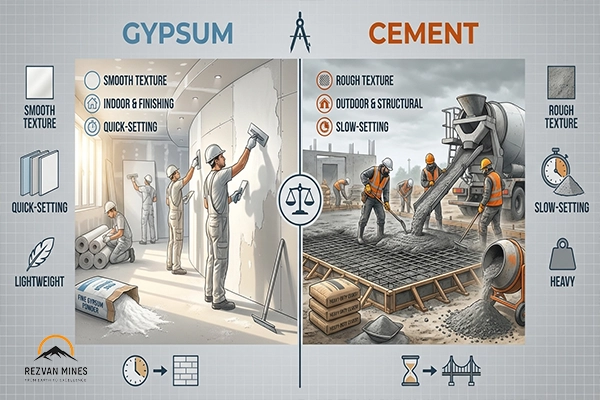
Gypsum vs Cement Plaster: Key Differences in Application
The comparison of gypsum vs cement plaster is one of the most practical decisions in interior construction, because both materials are commonly used for wall finishing—yet their performance and workflow impact are fundamentally different.
Installation Speed and Workability
Gypsum plaster sets quickly and requires minimal curing time. In most projects, walls finished with gypsum can be painted within 24–48 hours. This makes gypsum plaster ideal for fast-track construction and renovation projects where time directly affects cost.
Cement plaster, in contrast, has a slow setting and curing process. Proper curing may take several days, sometimes weeks, depending on climate conditions. This delay is a major drawback in interior applications and is one of the most cited cement plaster disadvantages in modern construction.
Surface Finish and Aesthetics
Gypsum plaster provides a smooth, uniform, and paint-ready surface without extensive finishing work. This is a major reason behind the growing popularity of gypsum in high-end residential and commercial interiors.
Cement plaster typically results in a rougher surface and often requires additional layers such as wall putty to achieve a comparable finish. From a visual and finishing standpoint, gypsum clearly dominates this part of the Gypsum vs Cement comparison.
Crack Resistance and Shrinkage
Gypsum plaster has minimal shrinkage during setting, which significantly reduces the risk of surface cracks. This property improves long-term appearance in dry interior environments.
Cement plaster is more prone to shrinkage cracks, especially if curing is improper or rushed. These cracks do not always affect structural safety but can increase maintenance costs and reduce surface quality.
Application Environment
Gypsum plaster is strictly recommended for dry interior areas. Using it in wet zones or exterior walls without protection is a technical mistake—not a preference issue.
Cement plaster performs reliably in both interior and exterior conditions, including moisture-prone environments. This versatility explains why cement remains dominant despite its drawbacks.
Cost Implications
While gypsum plaster may appear more expensive per unit, reduced labor time and faster project delivery often offset the material cost. Cement plaster may seem cheaper initially, but extended labor and curing time can increase total project expenses.
Gypsum vs Cement for Walls: Strength, Weight, and Performance
When selecting wall materials, the comparison of gypsum vs cement for walls comes down to three practical factors: mechanical strength, structural load, and long-term performance under real conditions. Ignoring these factors is how projects end up with premature damage or unnecessary costs.
Mechanical Strength
Cement-based walls and plasters offer significantly higher compressive and impact strength. This makes cement the default choice for load-bearing walls, exterior façades, and areas exposed to physical stress. In any serious gypsum vs cement construction analysis, cement clearly dominates where strength is non-negotiable.
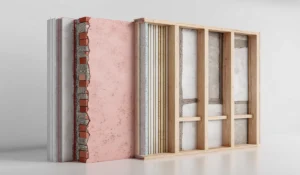
Gypsum, by contrast, is not designed to carry structural loads. Gypsum boards and plasters perform well as surface layers and partition systems but rely on an underlying structural frame. Using gypsum as a substitute for cement in load-bearing walls is a technical error, not an optimization.
Weight and Structural Load
One of gypsum’s strongest advantages is its low density. Gypsum wall systems reduce dead load on the building structure, which is particularly valuable in high-rise construction and renovation projects. This weight reduction can translate into lower structural reinforcement costs.
Cement walls and plasters are considerably heavier. While this weight contributes to strength and stability, it also increases the overall load on foundations and structural elements. This trade-off is central to evaluating gypsum vs cement durability in different building contexts.
Performance Over Time
In dry, controlled indoor environments, gypsum walls maintain dimensional stability and surface quality for years with minimal maintenance. Cracking is rare when installation guidelines are followed.
Cement walls perform better in environments exposed to moisture, temperature variation, or mechanical stress. They age more slowly under harsh conditions, although surface cracking and finish degradation are common without proper curing and maintenance.
Fire and Thermal Behavior
Gypsum contains chemically bound water, which contributes to its natural fire-resistant behavior. This characteristic is particularly relevant in interior wall systems and is one reason gypsum is often specified in fire-rated assemblies.
Cement also performs well under fire exposure but behaves differently, relying more on mass and thickness than chemical composition. This distinction becomes more important in detailed gypsum vs cement fire resistance evaluations, which are covered in later sections.
Scientific Reference
The fire and thermal performance of gypsum-based wall systems is supported by peer-reviewed research, including studies on dehydration behavior and heat absorption mechanisms in gypsum materials.
For example:
Harmathy, T.Z. – “Fire Safety Design and Concrete”, Fire Technology Journal
https://www.researchgate.net/publication/315482763_Fire_safety_design_and_concrete
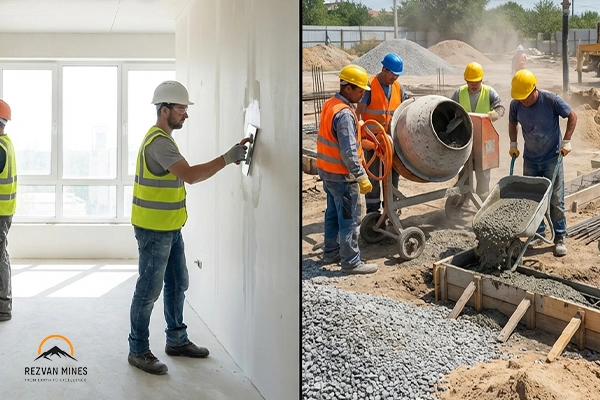
Installation Speed and Construction Efficiency: Gypsum vs Cement
Installation speed is one of the most underestimated factors in material selection, yet it directly affects labor cost, project timelines, and cash flow. In real-world projects, the comparison of Gypsum vs Cement often shifts in favor of the material that enables faster execution with fewer dependencies.
Setting Time and Workflow
Gypsum-based systems are designed for rapid installation. Gypsum plaster sets within minutes and reaches surface readiness in a very short time. This allows finishing stages—such as painting and decoration—to begin almost immediately. In large interior projects, this speed advantage compounds across floors and units.
Cement-based systems require significantly longer setting and curing times. Proper curing is not optional; skipping or shortening it leads to cracking and surface failure. This delay disrupts workflow sequencing and increases idle labor time, making cement less efficient for interior finishing.
Labor Intensity and Skill Requirements
Gypsum plaster is easier to apply and demands less physical effort. Crews can cover larger surface areas per day with fewer workers. This efficiency directly lowers labor costs, which is a key reason gypsum is preferred in time-sensitive gypsum vs cement construction scenarios.
Cement plaster is labor-intensive and highly dependent on worker skill. Improper mixing ratios, uneven application, or poor curing practices can cause defects that require rework—one of the hidden cement plaster disadvantages rarely accounted for in initial cost estimates.
Site Cleanliness and Resource Consumption
Gypsum installation generates less waste and requires minimal water usage. Cleaner sites reduce cleanup time and improve overall project coordination, especially in occupied or renovation environments.
Cement applications consume more water and generate heavier waste. This not only slows down execution but can also increase disposal and handling costs on large projects.
Impact on Project Economics
Faster installation means earlier project completion. Earlier completion means reduced overhead, faster handover, and quicker revenue realization. In this context, gypsum’s speed advantage often outweighs its higher material cost when comparing Gypsum vs Cement from a business perspective—not just a technical one.
Gypsum vs Cement: Durability and Long-Term Maintenance
Durability is where many construction material comparisons become misleading. In the Gypsum vs Cement debate, long-term performance depends less on the material itself and more on whether it is used in the correct environment.
Resistance to Environmental Factors
Cement-based materials are highly resistant to moisture, temperature fluctuations, and mechanical wear. This makes cement the preferred option for exterior walls, basements, and areas exposed to humidity or water contact. In these conditions, cement maintains structural integrity over decades with routine maintenance.
Gypsum, however, performs best in dry and controlled indoor environments. Prolonged exposure to moisture can weaken gypsum surfaces, leading to softening or surface degradation. This limitation is a critical factor when assessing gypsum vs cement durability, and ignoring it is a common cause of premature interior damage.
Cracking and Surface Stability
Gypsum materials exhibit low shrinkage during setting, which reduces the likelihood of surface cracking in interior spaces. When installed correctly, gypsum walls and ceilings retain their smooth finish with minimal maintenance.
Cement surfaces are more prone to shrinkage-related cracks, especially if curing conditions are inadequate. While these cracks rarely compromise structural safety, they increase repair and repainting costs over time—one of the hidden maintenance burdens of cement finishes.
Maintenance Requirements
Gypsum surfaces generally require less frequent repair in dry environments. Minor surface damage is easy to fix, and repainting does not require extensive preparation.
Cement-based surfaces demand more maintenance, particularly in interior applications where fine cracks and surface roughness become visible over time. Repairs are often more labor-intensive and disruptive.
Lifecycle Perspective
From a lifecycle standpoint, cement offers superior durability under harsh conditions, while gypsum provides long-term performance in interior environments when moisture is controlled. The mistake is not choosing gypsum or cement—but assuming one material can replace the other across all applications.
This lifecycle distinction reinforces why Gypsum vs Cement should be evaluated based on use case rather than material reputation.
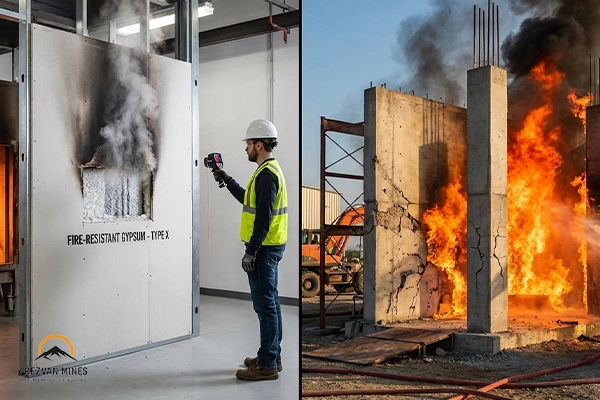
Gypsum vs Cement: Fire Resistance and Safety Performance
Fire performance is one of the most misunderstood aspects of material selection. In the Gypsum vs Cement comparison, both materials behave well under fire exposure—but for entirely different technical reasons. Understanding this difference matters in safety-critical construction decisions.
Fire Behavior of Gypsum
Gypsum contains chemically bound water within its crystalline structure. When exposed to fire, this water is gradually released as steam, which absorbs heat and slows down temperature rise. This process delays fire spread and helps maintain the integrity of wall and ceiling assemblies for a longer period.
Because of this inherent property, gypsum is widely used in fire-rated partitions, ceilings, and interior wall systems. In terms of gypsum vs cement fire resistance, gypsum performs exceptionally well in passive fire protection applications where time is the critical factor.
Fire Behavior of Cement
Cement-based materials rely on mass and thickness rather than chemical composition for fire resistance. Concrete and cement plaster do not burn and can withstand very high temperatures without immediate structural failure.
However, under prolonged fire exposure, cement-based systems may suffer from cracking, spalling, or loss of surface integrity due to rapid temperature changes. This does not mean cement performs poorly—but its fire resistance mechanism is fundamentally different from gypsum.
Application-Specific Safety Performance
In interior environments, gypsum systems are often preferred for fire-rated walls because they combine fire resistance with lightweight construction and fast installation. This makes them ideal for commercial buildings, offices, and residential units where compartmentation and evacuation time are critical.
Cement is more suitable for structural elements and exterior fire exposure scenarios, where load-bearing capacity must be preserved even during extreme heat conditions. In these cases, cement’s strength advantage outweighs gypsum’s thermal behavior.
Code Compliance and Practical Reality
Most modern building codes recognize both materials as fire-resistant when used correctly. The mistake is assuming fire resistance alone determines material choice. In real projects, fire safety must be evaluated alongside structural role, weight, installation speed, and environmental exposure.
In short, Gypsum vs Cement in fire performance is not a question of which material is safer—but which one is safer for the specific application.
Final Comparison and Buyer Recommendation
After breaking down performance, durability, fire safety, cost, and application scenarios, the Gypsum vs Cement comparison comes down to one critical truth: there is no universally “better” material—only a more appropriate one for each construction context.
Side-by-Side Decision Summary
| Decision Factor | Gypsum | Cement |
|---|---|---|
| Installation speed | Very fast | Slow |
| Surface finish | Smooth, paint-ready | Rougher, needs finishing |
| Moisture resistance | Low | High |
| Structural strength | Non-structural | Structural |
| Fire protection (interior) | Excellent | Moderate |
| Long-term durability (exterior) | Limited | Excellent |
| Maintenance effort | Low (dry areas) | Higher (interiors) |
This table makes one thing obvious: choosing based on habit or material price alone is a mistake.
When Gypsum Is the Right Choice
Choose gypsum if your project prioritizes:
- Interior walls and ceilings
- Fast construction timelines
- Fire-rated partitions
- Lightweight systems with minimal structural load
- Smooth finishes with low maintenance
In modern residential and commercial buildings, gypsum-based systems are often the most efficient solution when environmental conditions are controlled.
When Cement Is the Right Choice
Cement remains the correct option for:
- Exterior walls and façades
- Wet areas such as bathrooms and basements
- Structural or load-bearing components
- High-impact or high-wear environments
If durability under moisture and mechanical stress is the priority, cement is non-negotiable.
The Real Buyer Mistake
The biggest error in Gypsum vs Cement decisions is trying to force one material to replace the other. Projects fail—not because gypsum or cement is weak—but because they are used outside their performance envelope.
Smart construction is not about loyalty to materials. It is about aligning material behavior with real-world conditions.
If your project relies on high-quality gypsum performance, the raw material matters as much as the system design.
Source Raw Gypsum Stone from Rezvan Mines
Premium-grade gypsum stone suitable for construction, cement production, and industrial applications—supplied with consistency, scale, and quality control.