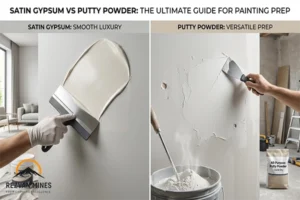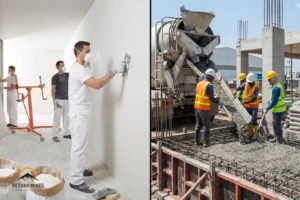

In modern construction, the shift from brick masonry to reinforced concrete structures has revolutionized building stability, but it has introduced a significant challenge for interior finishing: plastering smooth concrete. Unlike traditional brick or block walls, which offer a rough, high-suction surface perfect for standard gypsum adhesion, modern concrete elements—such as pillars, ceilings, and shear walls—are often dense, non-absorbent, and incredibly smooth.
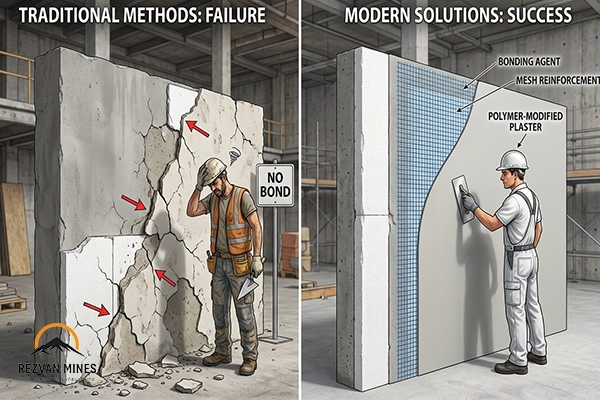
For contractors and architects, this creates a critical “compatibility gap.” Standard building gypsum relies heavily on mechanical bonding (gripping into pores) and suction (absorbing water to crystallize). When applied to a low-suction surface like high-grade concrete or insulation foam, standard plaster cannot form this bond. The result? Hollow sounds behind the wall, inevitable cracking, and in worst-case scenarios, massive delamination where entire sheets of plaster detach from the ceiling or wall.
The Science of Adhesion: Why “Smooth” is the Enemy
To understand the solution, we must first dissect the problem. Successful plastering relies on two primary types of adhesion:
- Mechanical Key: The plaster physically locks into the roughness of the substrate.
- Chemical/Suction Bond: The substrate absorbs a specific amount of moisture from the plaster paste, pulling the crystals into the surface as they set.
When plastering smooth concrete, both mechanisms are compromised. Concrete cast in steel or plywood formwork results in a glass-like finish. It has almost zero mechanical key. Furthermore, the density of structural concrete means it has very low water absorption. If you apply ordinary “white gypsum” or “micronized gypsum” directly to this surface, the water stays within the plaster mix. Gravity pulls the heavy wet mix down, and without a “grip,” the plaster slides or dries as a separate shell rather than a bonded layer.
The Historical (and Flawed) Solutions
Before the advent of specialized gypsum for concrete surfaces, builders resorted to labor-intensive and costly workarounds to force adhesion:
- Chipping and Hacking: Manual labor teams would use axes or chisels to physically damage the concrete surface to create roughness. This is not only time-consuming and expensive but can also cause micro-fractures in the concrete cover.
- Wire Mesh Reinforcement: Nailing chicken wire or metal mesh to the concrete before plastering. While this provides a mechanical grip, it requires drilling into hard concrete, adds significant material cost, and increases the thickness of the plaster layer unnecessarily.
- Cement Slurry Splatter: Spraying a rough cement-sand mix beforehand. This is messy, requires curing time, and doesn’t guarantee a chemical bond with the gypsum layer that follows.
These methods are relics of the past. In today’s fast-paced construction industry, efficiency is key. The modern solution lies not in changing the wall to fit the plaster, but in choosing a plaster chemically engineered for the wall. This is where the specific adhesive gypsum benefits come into play—a product category known technically as “Bonding Plaster” or commercially as Gyptone.
What is Gyptone and How Does It Solve the Adhesion Crisis?
To address the limitations of traditional materials, the construction industry developed a specialized class of products known as “Bonding Plasters.” In our product line, this is represented by the flagship product: Gyptone Gypsum.
Gyptone is not merely “finer” plaster; it is a chemically engineered composite. While its base is high-purity micronized gypsum, its performance is driven by a complex formulation of hydrophilic additives, polymeric binders, and retaining agents. Unlike standard gypsum which is purely mineral-based, Gyptone functions as a hybrid adhesive-plaster.
The Chemistry of Connection: Chemical vs. Mechanical Bonding
When you are plastering smooth concrete, you cannot rely on the wall to “grab” the plaster. Instead, the plaster must actively “stick” to the wall. Gyptone achieves this through enhanced chemical bonding.
The polymer additives within Gyptone create a microscopic adhesive film at the interface between the gypsum and the concrete. This allows the material to bond aggressively to non-porous surfaces. Even on concrete that is as smooth as glass, Gyptone creates an inseparable bond once cured. This eliminates the risk of delamination, ensuring that the plaster layer effectively becomes part of the structural element rather than just a covering shell.
Beyond Concrete: The Solution for Foam and Polystyrene
Modern energy-efficient buildings often use ICF (Insulated Concrete Forms) or expanded polystyrene (Styrofoam) for insulation. Standard gypsum simply slides off these plastic-like surfaces.
This is another area where plastering smooth concrete strategies apply directly to foam. The same adhesive properties that allow Gyptone to bond to dense concrete make it the only viable option for plastering directly over Styrofoam ceilings or walls without the need for a heavy metal mesh infrastructure. The bonding plaster application on these surfaces creates a rigid, fire-resistant shell over the soft insulation, protecting it while providing a perfect white base for final painting.
Key Technical Advantages of Gyptone
Why should a project manager switch from traditional methods to Gyptone? The benefits go beyond just “sticking”:
- High Elasticity: Concrete structures undergo thermal expansion and contraction. Standard gypsum is brittle and cracks under this movement. Gyptone has a higher modulus of elasticity, allowing it to absorb minor structural movements without cracking.
- Extended Setting Time: unlike “Plaster of Paris” which sets in minutes, Gyptone is formulated for a controlled setting time. This gives master plasterers sufficient time to spread, level, and float the surface to a perfect finish, which is crucial when covering large concrete shear walls.
- No Need for Undercoats: In traditional plastering smooth concrete workflows, you might need a primer or a splatter dash coat. Gyptone acts as both the bonding agent and the filling layer. It is a “direct-application” material, significantly reducing the timeline of interior finishing.
- Temperature & Humidity Resistance: Once set, the modified structure of Gyptone is more resistant to humidity fluctuations compared to standard raw gypsum, making it ideal for high-rise buildings where climate control might vary during construction phases.
By understanding the technical composition of Gyptone, it becomes clear that it is not just an alternative to ordinary plaster—it is a replacement for the entire complex system of mesh, glue, and labor that was previously required to cover concrete.

Mastering the Application: How to Plaster Smooth Concrete with Gyptone
Achieving a flawless finish when plastering smooth concrete requires more than just the right product; it demands the correct technique. While Gyptone Gypsum eliminates the need for wire mesh and chipping, surface preparation and mixing ratios remain critical for optimal performance.
Follow this expert Gyptone usage guide to ensure a durable, crack-free bond on concrete walls and ceilings.
Phase 1: Surface Preparation
Before opening the first bag of Gyptone, the substrate must be inspected. Even the best bonding plaster application will fail if the underlying surface is compromised.
- Clean and De-grease: Concrete forms are often sprayed with release agents (oil) to help remove the molds. This oil is the enemy of adhesion. The surface must be free of dust, grease, and loose particles. If necessary, wash the concrete with a degreasing agent or water jet.
- Check for Moisture: Ensure the concrete is dry. While Gyptone needs water to mix, a saturated concrete wall can weaken the bond at the interface.
- Bridge the Gaps: If there are deep holes or large gaps between concrete panels, fill them first with a stiff mix of Gyptone and let it set before applying the full coat. This prevents shrinkage cracks later.
Phase 2: Mixing the Perfect Batch
The water-to-plaster ratio is chemically precise for Gyptone. Unlike traditional “throw and mix” methods, precision is key.
- Ratio: Generally, use approximately 6 to 6.5 liters of clean water for every 10 kg of Gyptone powder (always check the specific bag instructions as formulations may vary slightly).
- The Method:
- Pour the water into a clean mixing bucket first.
- Slowly sprinkle the Gyptone powder into the water. Do not dump it all at once; let it absorb the water naturally.
- Wait (Soaking Time): Allow the mix to sit for 2-3 minutes. This allows the polymer additives to activate.
- Mix: Use a low-speed mechanical mixer to blend until a creamy, lump-free paste is achieved. Avoid high-speed mixing which introduces air bubbles.
(For a deeper technical understanding of gypsum setting times and consistency standards, refer to ASTM C472 – Standard Test Methods for Physical Testing of Gypsum, Panel Products, and Concrete Composites ).
Phase 3: Application Technique
Now, the actual process of plastering smooth concrete begins.
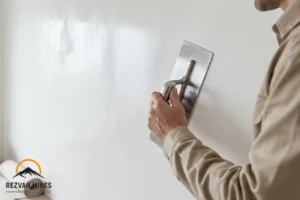
- The Contact Coat: Apply a thin layer of Gyptone firmly against the concrete surface using a steel trowel. Press hard. This pressure forces the polymers into the microscopic pores of the concrete, establishing the primary chemical bond.
- Building Thickness: Immediately apply the remaining material to reach the desired thickness (typically 10mm to 15mm is recommended for a single coat). If a thicker layer is needed, it is best done in two passes, scratching the first layer to provide a key for the second.
- Leveling (Floating): Use an aluminum H-bar or straight edge to level the surface. Because Gyptone has an extended setting time, you have a longer window to correct imperfections compared to standard plaster.
- Finishing: Once the plaster begins to stiffen (usually after 45-60 minutes), use a sponge float or a steel trowel with a splash of water to achieve a glass-smooth finish.
By following this protocol, the risk of delamination is virtually eliminated. The result is a monolithic wall surface where the concrete and plaster act as one unit.
The Economics of Plastering Smooth Concrete: Is Gyptone Worth the Investment?
One of the most common questions contractors ask regarding plastering smooth concrete involves cost. At first glance, a bag of high-performance polymer-modified gypsum (Gyptone) carries a higher price tag than a standard bag of micronized or white gypsum. However, smart construction management is about the “total installed cost,” not just the material unit price.
When you analyze the full scope of plastering smooth concrete walls using traditional methods versus modern bonding plasters, the math shifts dramatically in favor of Gyptone.
The Hidden Costs of Traditional Methods
If you attempt plastering smooth concrete using ordinary gypsum, you cannot simply apply it directly. To make it stick, you are forced to incur additional expenses that are often overlooked in initial estimates:
- The Cost of “Chicken Mesh” (Rabits): To create a mechanical key, you must purchase rolls of galvanized wire mesh. This is a significant material cost added per square meter.
- Installation Labor: The mesh doesn’t install itself. You need a team to cut, stretch, and nail the mesh into the hard concrete. This involves drilling, wall plugs, and hours of labor before a single gram of plaster is even mixed.
- Extended Project Timeline: The time spent prepping the wall with mesh or chipping the concrete surface delays the actual plastering phase by days. In large commercial projects, time is money.
Why Gyptone Saves Money
In contrast, plastering smooth concrete with Gyptone is a “direct-application” process. You eliminate the purchase of mesh, you eliminate the labor of installation, and you eliminate the delay. When you calculate the cost per square meter of the finished wall, Gyptone often comes out 20% to 30% cheaper because it compresses three steps (prep, mesh, plaster) into one (plaster).
Furthermore, the risk of “callbacks” (returning to fix cracks) is a hidden cost. Plastering smooth concrete with standard gypsum has a high failure rate. If 10% of the plaster delaminates after six months, the repair costs—including repainting and labor—will destroy any initial savings. Gyptone serves as an insurance policy against these failures.
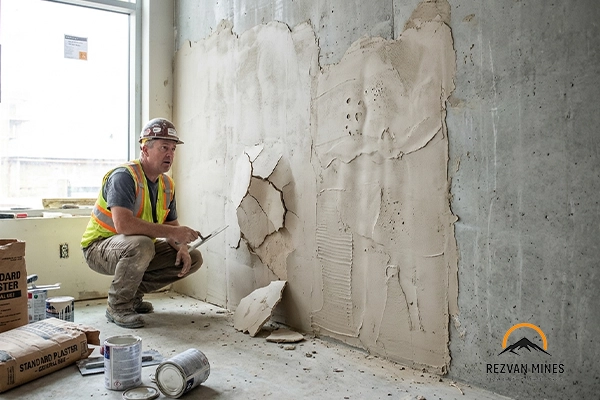
Troubleshooting: Common Mistakes When Plastering Smooth Concrete
Even with the best product, execution errors can lead to subpar results. Since plastering smooth concrete relies on chemical adhesion rather than mechanical grip, the margin for error in preparation is smaller.
Here are the most frequent mistakes professionals make when plastering smooth concrete and how to avoid them:
1. Ignoring the “Dust Barrier”
The biggest enemy of plastering smooth concrete is dust. Construction sites are dusty environments. If a layer of fine dust sits on the concrete surface, the Gyptone bonds to the dust, not the wall.
- Solution: Always wipe down or wash the concrete surface immediately before application. The substrate must be “dust-free” for the polymers to activate effectively.
2. Adding Too Much Water (Over-dilution)
Some plasterers try to increase the coverage area of a bag by adding extra water. When plastering smooth concrete, the strength of the bond is directly related to the polymer concentration. Diluting the mix too much weakens the polymer matrix.
- Result: The plaster might stick initially but will have low tensile strength and may detach under vibration. Always stick to the recommended water/powder ratio.
3. Application on “Green” Concrete
Applying gypsum to fresh, wet concrete (green concrete) is a critical error. Concrete shrinks as it cures. If you start plastering smooth concrete while the building structure is still shrinking significantly, the shear forces will crack the plaster.
- Recommendation: Ensure the concrete has cured for at least 28 days before applying any finishing coat.
4. Using Dirty Tools or Water
The chemistry of plastering smooth concrete with Gyptone is sensitive. Using water contaminated with cement residue or oil, or using mixing buckets that have old, set plaster in them, can accelerate the setting time uncontrollably (flash setting). This prevents the plasterer from achieving a proper bond before the material hardens.
5. Layer Thickness Violations
While Gyptone is robust, plastering smooth concrete in a single layer thicker than 2-3 cm can cause sagging due to gravity before the chemical set occurs.
- Best Practice: If significant thickness is required to plumb the wall, apply in two coats. Apply the first coat, scratch it (score the surface) to create a key, let it set, and then apply the second coat. This ensures stability.
By avoiding these pitfalls, plastering smooth concrete becomes a straightforward, predictable, and highly profitable process for contractors. The shift from “mechanical force” to “chemical intelligence” in building materials is inevitable, and Gyptone is leading this transition.
Conclusion: The Future of Plastering Smooth Concrete
The construction industry is evolving, and traditional methods of plastering smooth concrete are rapidly becoming obsolete. The outdated practices of relying on galvanized wire mesh, concrete chipping, or applying unstable chemical primers are labor-intensive, costly, and highly susceptible to failure over time.
Gyptone Gypsum represents a definitive shift from mechanical reliance to chemical intelligence. By utilizing advanced polymer additives, Gyptone ensures that plastering smooth concrete is no longer a high-risk endeavor, but a streamlined, one-step application process. It offers superior adhesion, unmatched durability against shear forces, and a significantly lower total installed cost.
For contractors, developers, and engineers looking to optimize their workflow and eliminate the risk of delamination, the choice is clear. Stop fighting the substrate. Upgrade your building materials and ensure your next project utilizes Gyptone for all your direct-to-concrete finishing needs.
Frequently Asked Questions (FAQ) About Plastering Smooth Concrete
To further clarify the technical and practical aspects of this process, here are the most common questions professionals ask regarding plastering smooth concrete.
Can I use regular white gypsum for plastering smooth concrete if I apply a primer first?
While some contractors attempt this, it is not recommended for long-term durability. Liquid primers can degrade, and standard gypsum still lacks the internal tensile strength required to handle the microscopic thermal expansions of a concrete wall. Plastering smooth concrete requires a material specifically engineered for the task, like Gyptone, which has the adhesive polymers built directly into its dry mix.
What is the exact coverage rate when plastering smooth concrete with Gyptone?
Consumption depends heavily on the deviation (plumbness) of the concrete wall. However, as a standard rule of thumb for plastering smooth concrete, you will consume approximately 10 to 12 kilograms of Gyptone powder per square meter for a layer that is 1 centimeter (10mm) thick.
Do I need to wet the concrete wall before applying Gyptone?
No. Unlike traditional cement renders that require a saturated surface dry (SSD) condition, plastering smooth concretewith polymer-modified gypsum requires a dry, dust-free, and oil-free surface. Excessive moisture on the concrete interface can dilute the polymers in the Gyptone and severely weaken the chemical bond.
Can Gyptone be used on EPS (Styrofoam) blocks or just concrete?
Yes. The chemical adhesion properties that make Gyptone exceptional for plastering smooth concrete also make it the perfect solution for plastering directly onto Expanded Polystyrene (EPS), Extruded Polystyrene (XPS), and other smooth insulating foam boards without the need for fiberglass mesh.
How long does it take for Gyptone to fully set on a concrete wall?
The initial setting time for Gyptone is intentionally extended (typically 45 to 60 minutes) to allow workers ample time for leveling and finishing. However, when plastering smooth concrete, the plaster will reach its final set and maximum bonding strength once it is completely dry, which usually takes 3 to 7 days depending on ambient humidity and temperature.