Rezvan Mines Blog

The Rezvan Mines Blog delivers expert insights, industry updates, and practical knowledge on gypsum products and modern construction solutions. The Rezvan Mines Blog supports professionals and international partners with reliable information for informed material selection and successful project outcomes.

In this guide, we compare fire resistant gypsum vs regular gypsum by focusing on performance, fire behavior, applications, and cost implications, helping you determine which option is appropriate for your specific construction project.
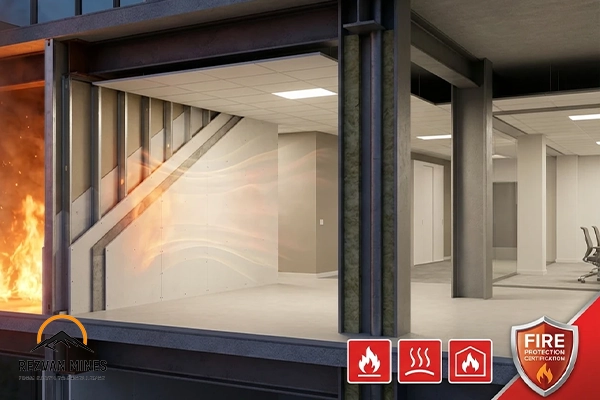
Fire Resistant Gypsum Plaster is a gypsum-based construction material designed to resist fire exposure by slowing heat transfer, maintaining structural integrity, and contributing to passive fire protection in buildings. It contains chemically bound water that helps delay temperature rise during a fire.
The right gypsum product depends on several critical factors, including the application type, required surface quality, fire resistance, setting time, and long-term durability. To choose the right gypsum product, builders must evaluate whether the gypsum will be used for wall finishing, ceiling applications, decorative elements, or fire-resistant systems, while also considering compatibility with interior wall finishing materials and construction standards.

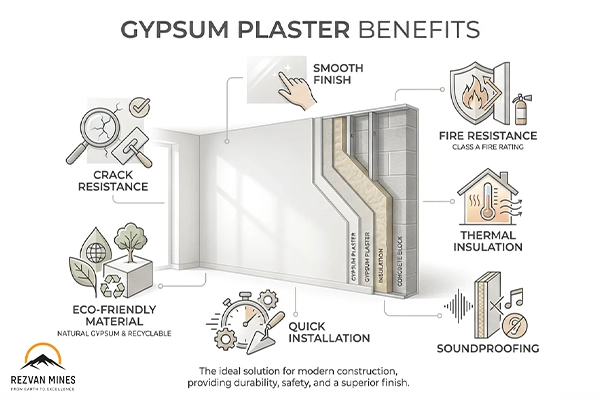
Gypsum plaster offers numerous benefits in modern construction, including smooth surface finishing, fast setting time, fire resistance, lightweight structure, and eco‑friendly properties. It is widely used for interior walls and ceilings due to its durability, aesthetic quality, and cost‑effective application compared to traditional cement plaster.