
Introduction: The Invisible Foundation of a Perfect Wall
Every professional painter knows that the secret to a flawless, mirror-like finish isn’t the paint itself—it’s the preparation beneath it. For decades, contractors have relied on traditional mixtures to smooth out imperfections, often battling dust clouds and uneven absorption rates. However, the construction industry has evolved, bringing engineered minerals into the spotlight. Today, we address the critical debate in modern interior finishing: Satin Gypsum vs Putty Powder.
Choosing the right material for your painting preparation steps is not just about the price per bag; it is about labor efficiency, paint consumption, and the longevity of the final look. At Rezvan Mines, we understand the mineral composition that differentiates a standard wall from a masterpiece. In this comprehensive guide, we will dissect the chemical and practical differences between these two materials to help you make an informed decision for your next project.
What is the difference between Satin Gypsum and Putty Powder?
When comparing Satin Gypsum vs Putty Powder, the primary difference lies in their composition and finish. Satin Gypsum is a polymer-modified, micronized plaster that creates a hard, non-absorbent, and glass-smooth surface requiring minimal sanding. In contrast, traditional Putty Powder (often oil or acrylic-based mastic) is softer, highly absorbent, and shrinks upon drying, necessitating multiple layers and extensive sanding to achieve a flat surface. For high-end finishes and paint savings, Satin Gypsum is the superior choice.
Understanding the Contenders
Before we dive into the technical comparison, it is essential to define what we are actually putting on our walls. Many DIY enthusiasts and even some seasoned contractors use these terms interchangeably, but chemically, they are worlds apart.
1. The Traditional Choice: Putty Powder (Mastic/Wall Putty)
Putty powder, historically known as “Mastic” in many regions, has been the go-to solution for smoothing walls for years. It is typically a mixture of coarse gypsum or cement based fillers combined with glues (binders).
- The Application: It is usually applied in thin layers over plastered walls to fill minor pores.
- The Problem: The biggest drawback of Putty Powder is its “shrinkage.” As the water evaporates, the volume of the putty decreases, often leading to fine cracks or a rough texture that demands aggressive sanding. Furthermore, it acts like a sponge. When you apply expensive paint over standard putty, the first coat is almost entirely absorbed by the wall, forcing you to apply three or even four coats of paint to get the true color.
2. The Modern Solution: Satin Gypsum (Polymer-Modified Plaster)
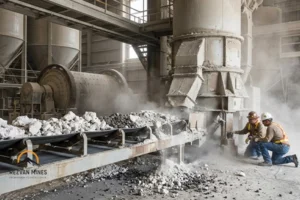
Satin Gypsum represents the next generation of wall smoothing materials. Sourced from high-purity, micronized gypsum rock (like those extracted at Rezvan Mines) and enhanced with polymer additives, this material doesn’t just “dry”—it sets chemically.
- The Advantage: Because it is micronized (ground to an ultra-fine mesh of 200 or higher), it creates a surface so smooth it feels like satin fabric—hence the name. It solves the absorption issue by creating a sealed surface, effectively acting as a primer and a skim coat in one step.
In the ongoing battle of Satin Gypsum vs Putty Powder, the industry is slowly shifting towards Satin for one major reason: Efficiency. While Putty might seem cheaper at the checkout counter, the hidden costs of labor and wasted paint tell a different story.
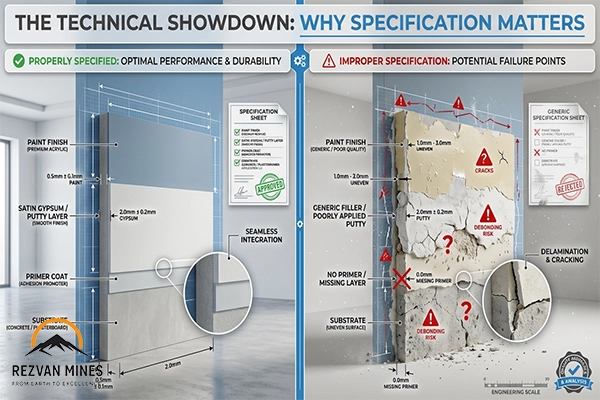
The Technical Showdown: Why Specification Matters
When a project manager or homeowner asks for a “smooth wall,” they are rarely interested in the chemistry. They care about the result: How flat is it? How much paint will it consume? And how long will it last? However, to achieve that result efficiently, understanding the material behavior is non-negotiable.
Let’s break down the performance of Satin Gypsum vs Putty Powder across three critical categories: Finish Quality, Paint Economy, and Structural Durability.
1. The Sanding Nightmare vs. Glass-Like Finish
The most immediate difference a worker notices during the Satin plaster application is the reduction in labor.
- Putty Powder: Because traditional putty shrinks as it dries (due to water evaporation), it often leaves a rough, chalky surface. To get it paint-ready, workers must spend hours sanding it down, creating massive amounts of dust. This not only is a health hazard but also prolongs the project timeline significantly.
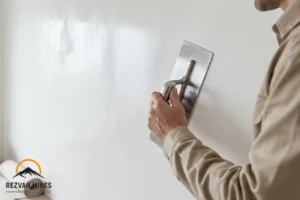
- Satin Gypsum: This is where the micronized gypsum benefits truly shine. Rezvan Mines produces Satin Gypsum with a mesh size of 200 or higher (particles smaller than 75 microns). Because the particles are so fine and the mix includes polishing polymers, the material can be troweled to a glass-like finish while wet. Once it sets, it requires little to no sanding—perhaps a very light touch with fine-grit paper (220+) just to remove minor ridges.
2. The “Paint Sponge” Effect: How to Reduce Painting Cost
This is the hidden cost that most budget calculations miss.
- Putty Powder (High Porosity): Traditional mastic is highly porous. When you apply the first coat of primer or paint, the putty sucks it in instantly, like a dry sponge. You often need a dedicated primer coat followed by 2-3 coats of expensive topcoat paint to get a solid, uniform color.
- Satin Gypsum (Low Porosity): Satin Gypsum creates a dense, sealed surface. It acts as its own primer. When you paint over Satin Gypsum, the paint sits on top of the surface rather than soaking in. This allows you to reduce painting cost by up to 30%, as you often achieve full coverage with just two coats of paint, skipping the heavy primer stage entirely.
3. Structural Integrity and Hardness
Have you ever leaned a chair against a wall and seen it leave a dent? That’s usually the sign of a soft putty finish.
- Putty Powder: Generally soft and chalky. It has low impact resistance and can easily be scratched with a fingernail even after drying.
- Satin Gypsum: Thanks to the chemical setting process (crystallization) and added polymers, Satin Gypsum cures to a much harder finish. It resists scratches and minor impacts far better than traditional pastes, ensuring the wall stays pristine for years, not just months.
At a Glance: Comparison Table
To summarize the Satin Gypsum vs Putty Powder debate, review the technical specifications below:
| Feature | Traditional Putty Powder (Mastic) | Rezvan Mines Satin Gypsum |
|---|---|---|
| Base Material | Coarse Gypsum/Cement + Glue | Micronized Gypsum + Polymers |
| Setting Mechanism | Air Drying (Water Evaporation) | Chemical Setting (Crystallization) |
| Surface Finish | Chalky, Requires Heavy Sanding | Glass-Smooth, Minimal Sanding |
| Porosity | High (Absorbs Paint) | Low (Saves Paint) |
| Drying Time | Slow (Dependent on humidity) | Controlled (Chemical reaction) |
| Hardness | Soft, Easily Scratched | Hard, Durable Surface |
| Paint Coverage | Requires 3-4 Coats | Requires 2 Coats |
The Verdict on Surface Preparation
While traditional putty might have a lower “bag price,” the labor required to sand it and the extra gallons of paint needed to cover it make it the more expensive option in reality. For modern construction, Satin plaster application is not just a luxury; it is an engineering necessity for achieving Level 5 drywall finishes.
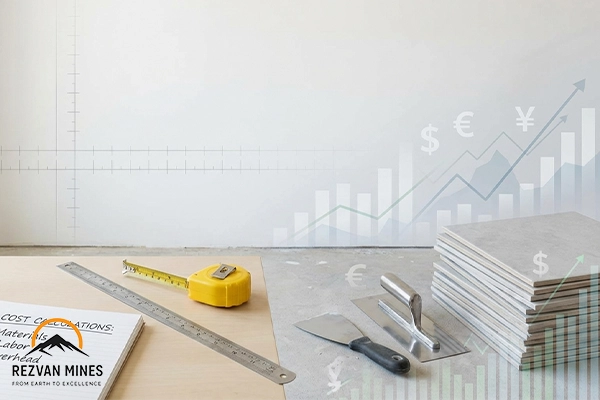
The Economic Truth: Calculating the Real Cost per Square Meter
One of the most common misconceptions in construction is confusing the “cost of material” with the “cost of the finished wall.” While a bag of traditional putty powder might have a lower price tag on the shelf compared to engineered Satin Gypsum, the final invoice tells a different story.
Let’s break down the economics of a standard 100-square-meter project.
The “Hidden” Costs of Traditional Putty
When you choose traditional mastic or putty powder, you are paying for inefficiencies:
- Labor Intensive: 60% of the time is spent sanding surfaces to remove trowel marks and ridges.
- Paint Consumption: Due to high absorption, you pay for an extra coat of primer and usually a 3rd coat of paint.
- Waste: Traditional putty dries out quickly in the bucket, leading to material waste.
The Rezvan Mines Advantage (ROI)
By switching to Satin Gypsum, the math changes in your favor:
- Zero Sanding: The self-leveling nature of micronized gypsum means you save huge on labor hours.
- Paint Savings: The non-porous surface saves you approx. 150 grams of paint per square meter.
- Speed: Faster drying and no priming wait-times mean the scaffolding comes down sooner.
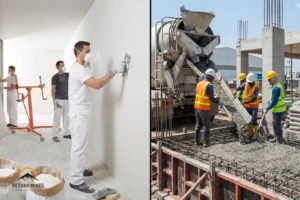
Pro Tip: In large-scale projects (like hotels or commercial towers), using Satin Gypsum can reduce the overall painting budget by 20-25%, even if the plaster itself costs slightly more per bag.
The Science of Breathing Walls: More Than Just Smoothness
Why does Satin Gypsum feel different? It comes down to the microstructure. Unlike inert cement-based fillers, gypsum is a “bio-active” mineral in the context of building physics.
According to research on building materials, gypsum possesses unique hygroscopic properties. This means it can absorb excess humidity from the room when the air is damp and release it when the air is dry, effectively acting as a natural climate control system.
A study published in the Journal of Building Engineering highlights that micronized gypsum plasters significantly contribute to thermal comfort and indoor air quality compared to synthetic polymer-based fillers. You can read more about the scientific analysis of gypsum’s thermal and hygroscopic properties here.
(Note to Reader: This specific property is why Rezvan Mines Satin Gypsum is recommended for hospitals and luxury residential projects where air quality is paramount.)
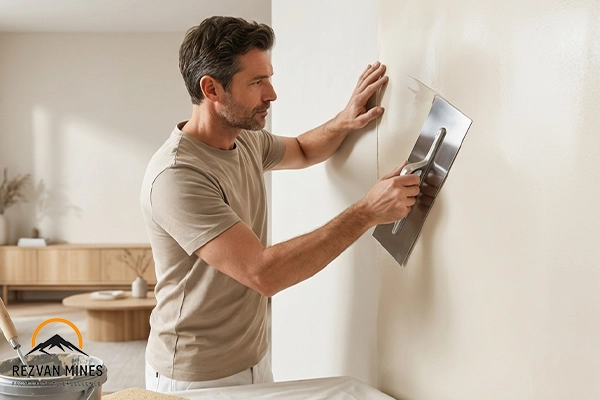
Master Class: How to Apply Satin Gypsum
If you are looking for the best skim coat for drywall or plastered masonry, follow this professional application protocol to ensure a flawless finish.
Step 1: Surface Preparation
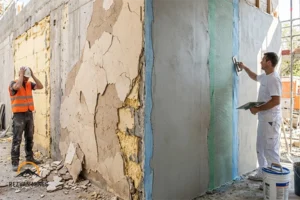
Before the Satin Gypsum vs Putty Powder debate even begins, the surface must be clean. Remove all dust, oil, and loose particles. If the base plaster is extremely dry, lightly mist it with water to prevent the wall from sucking the moisture out of the fresh satin mix too quickly.
Step 2: Mixing the Perfect Batch
Using the correct water-to-plaster ratio is critical for micronized gypsum.
- Pour clean water into a mixing bucket.
- Slowly sprinkle the Rezvan Mines Satin Gypsum powder into the water.
- Do not mix immediately. Let the powder soak (slake) for 2-3 minutes. This allows the polymers to activate.
- Mix with a low-speed mechanical mixer until you achieve a creamy, lump-free paste.
Step 3: Application (The “Tight Coat”)
Unlike bulky putty, Satin Gypsum should be applied in thin, tight layers.
- Use a steel trowel.
- Apply the first coat to fill major imperfections.
- Allow it to set firm but not fully dry.
- Apply the second “finish coat” immediately after. The micronized particles will merge, creating that signature glass-smooth surface.
By following this method, you eliminate the need for sanding entirely. The wall is now ready for painting with minimal consumption.
Conclusion: Making the Right Choice for Your Project
In the final analysis of Satin Gypsum vs Putty Powder, the winner depends on your priorities. If you are looking for the absolute lowest upfront material cost regardless of labor and quality, traditional putty might seem appealing. However, for professional builders, architects, and homeowners who value durability, finish quality, and long-term savings, Satin Gypsum is the undisputed champion.
The construction industry is moving away from old-school mastic mixtures. Why settle for a soft, absorbent surface when you can have a hard, glass-like finish that saves you money on paint? When comparing Satin Gypsum vs Putty Powder, remember that Rezvan Mines’ micronized technology offers a solution that pays for itself through reduced labor and paint consumption.
Frequently Asked Questions (FAQ)
To further clarify the Satin Gypsum vs Putty Powder debate, we have compiled the most common questions from our clients at Rezvan Mines.
1. In the battle of Satin Gypsum vs Putty Powder, which one saves more paint?
Without a doubt, Satin Gypsum wins. Due to its low porosity and polymer-enhanced structure, it creates a sealed surface. In a direct Satin Gypsum vs Putty Powder test, walls finished with Satin Gypsum required 30% less paint to achieve full coverage compared to the thirsty, absorbent surface of traditional putty.
2. Can I apply Satin Gypsum over an old Putty Powder layer?
Yes, but preparation is key. If the old putty is chalky or dusting, you must apply a primer first to stabilize the surface. However, for new construction, we recommend skipping the putty entirely and using Satin plaster application directly on the base coat to ensure maximum adhesion and durability.
3. Why is Satin Gypsum more expensive per bag than Putty Powder?
While the bag price is higher, the “finished wall cost” is often lower. When analyzing Satin Gypsum vs Putty Powder, you must factor in that Satin Gypsum eliminates the need for a separate primer coat and drastically reduces sanding labor. The initial material cost is offset by the speed of application and micronized gypsum benefits.
4. Is Satin Gypsum waterproof?
Standard Satin Gypsum is moisture-resistant (due to its breathing capability) but not fully waterproof. It is excellent for living rooms, bedrooms, and hallways. For wet areas like bathrooms, specialized hydrophobic additives are required. However, compared to standard Putty Powder which disintegrates with moisture, Satin Gypsum holds its structure far better in humid environments.
5. What makes Rezvan Mines Satin Gypsum different from generic brands?
Our product focuses on purity and mesh size. We use micronized gypsum with a mesh size of 200+, ensuring a buttery smooth application. Generic brands often use coarser gypsum, which brings you back to the same problems found in the Satin Gypsum vs Putty Powder comparison: roughness and the need for sanding.
Ready to Upgrade Your Finish?
Don’t let outdated materials compromise your project’s quality. Now that you understand the clear advantages in the Satin Gypsum vs Putty Powder comparison, it’s time to choose the material that professionals trust.
Rezvan Mines is a leading supplier of high-grade, micronized gypsum products tailored for modern construction needs. Whether you need to reduce painting cost or achieve a Level 5 drywall finish, our Satin Gypsum is the answer.
Contact Us Today:
- Email: sales@rezvanmines.com
- Website: www.rezvanmines.com
Transform your walls with the power of micronized gypsum.