
Industrial uses of micronized gypsum span multiple sectors due to its unique combination of particle fineness, chemical inertness and cost-effectiveness. Micronization reduces calcium sulfate dihydrate (CaSO₄·2H₂O) to ultrafine particles—typically 325 mesh (44 microns) or finer—transforming raw gypsum into a high-performance industrial mineral. This particle size reduction dramatically increases surface area, improving reactivity, dispersion uniformity and compatibility with diverse manufacturing processes.
Global demand for micronized gypsum powder applications exceeded 4.2 million metric tons in 2025, driven by construction chemicals, agricultural inputs and specialty manufacturing. Unlike coarse gypsum grades used in wallboard or cement retardation, micronized variants deliver precise functional properties: controlled viscosity in paints, enhanced nutrient delivery in fertilizers and uniform distribution in polymer matrices. Processing methods—impact milling, jet milling, or air classification—determine final particle morphology and surface characteristics, directly affecting performance in end applications.
The industrial value of micronized gypsum lies in three technical advantages: high whiteness (85-95% brightness), non-toxic composition and pH neutrality (6.5-7.5). These properties enable substitution of costlier fillers like precipitated calcium carbonate while maintaining product performance. However, specification requirements vary significantly across industries—pharmaceutical applications demand sub-10 micron D50 and heavy metal limits below 10 ppm, while agricultural grades tolerate coarser 200-mesh sizing with 90% calcium sulfate purity.
What is Micronized Gypsum and Why Particle Size Matters
Micronized gypsum results from mechanical comminution of natural or synthetic gypsum deposits to achieve particle sizes below 45 microns. Standard micronization produces 325-mesh (44μm) powder, while ultrafine grades reach 1250-mesh (10μm) or finer. Particle size distribution directly impacts suspension stability, chemical reactivity and surface coverage—critical parameters in coating formulations, agricultural sprays and pharmaceutical tablets.
Mesh size corresponds to screen openings per linear inch: 200-mesh passes 74-micron apertures, 325-mesh indicates 44-micron maximum particles. Industrial specifications typically define both top size (d90 or d100) and median diameter (d50). A 325-mesh product with d50 of 15 microns exhibits superior dispersion compared to 20-micron median material, even at identical top-size cutoff.
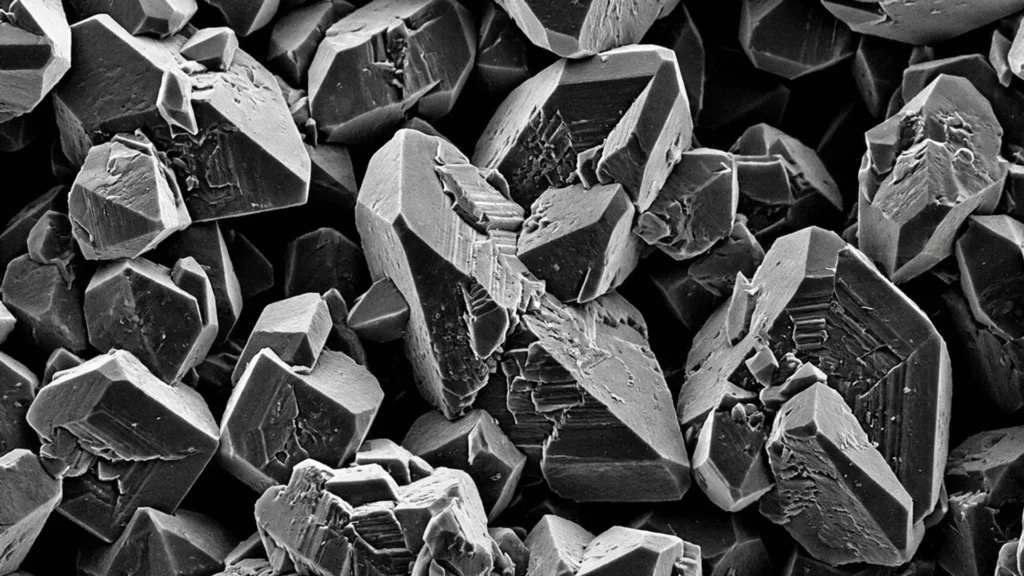
Chemical purity requirements vary by sector. Technical-grade micronized gypsum contains 85-92% CaSO₄·2H₂O with silica, clay minerals and carbonate impurities. Pharmaceutical and food-contact grades demand ≥98% purity with certified heavy metal analysis. Moisture content must stay below 0.5% to prevent caking during storage and ensure flowability in automated dosing systems.
Agriculture: Soil Amendment and Fertilizer Carrier
Agricultural applications consume approximately 1.8 million tons of micronized gypsum annually, leveraging its dual role as calcium-sulfur nutrient source and soil structure modifier. Fine particle size accelerates dissolution kinetics—200-mesh gypsum releases calcium ions 3-4 times faster than crushed agricultural gypsum (6-12mm granules), improving short-term nutrient availability in deficient soils.
Micronized formulations serve as carriers for micronutrient fertilizers, enabling uniform distribution of zinc, boron and iron compounds through dry-blend mixing. The gypsum matrix prevents segregation during handling and provides gradual sulfur release as sulfate (SO₄²⁻) for protein synthesis in crops like soybeans, canola and wheat. Recent studies demonstrate that ultrafine gypsum applications (≤20 microns) improve phosphorus availability in alkaline soils by reducing pH at root-zone interfaces through controlled acidification. (Source: Soil Science Society of America Journal, 2023)
For reclamation projects targeting sodic soils, micronized gypsum achieves faster sodium displacement compared to standard gypsum. The increased reactive surface area accelerates calcium-sodium ion exchange on clay particles, reducing soil dispersion and improving water infiltration within 6-8 weeks versus 3-6 months for granular products.
7 Critical Industrial Uses of Micronized Gypsum
Cement and Concrete: Retardation Control
Portland cement manufacturing requires 3-5% gypsum addition to regulate tricalcium aluminate (C₃A) hydration and prevent flash setting. Micronized gypsum (200-325 mesh) ensures homogeneous distribution through cement clinker during final grinding, producing consistent setting times across production batches. Particle fineness directly correlates with dissolution rate—finer gypsum releases sulfate ions faster, providing immediate retardation control during initial concrete mixing.
Ready-mix concrete producers incorporate micronized gypsum in specialty blends requiring extended workability without chemical admixtures. Dosage rates of 0.5-1.2% by cement weight extend initial set from 2.5 to 4-5 hours, critical for mass placements in hot climates or long-haul transportation. The ultrafine particles integrate seamlessly with supplementary cementitious materials like fly ash and slag, maintaining rheological stability.
Self-leveling underlayments and repair mortars utilize 325-mesh gypsum for rapid early strength development combined with controlled flow characteristics. The high surface area promotes ettringite formation (calcium sulfoaluminate hydrate), contributing to volume stability and crack resistance in thin-section applications.
Paint and Coatings: Functional Filler
Architectural and industrial coatings incorporate micronized gypsum as cost-effective extender pigment, typically at 15-30% loading in primer formulations. The platy particle morphology enhances film opacity while reducing titanium dioxide requirements—each 10% gypsum substitution can decrease TiO₂ usage by 3-4%, yielding significant raw material cost savings without compromising hiding power.
Particle size specifications for paint-grade gypsum demand tight control: d50 between 8-15 microns with maximum 44-micron top size. Coarser particles create surface defects and reduce gloss retention, while excessive fines (≤3 microns) increase oil absorption and viscosity, forcing higher binder consumption. Surface-treated micronized gypsum—coated with stearates or silanes—improves dispersion stability and reduces moisture sensitivity in water-based latex systems.
Textured coatings and stucco finishes use 200-mesh gypsum to achieve desired roughness profiles while maintaining workability. The angular particle shape creates mechanical interlocking within the coating matrix, improving crack bridging and impact resistance. Unlike spherical fillers (calcium carbonate), gypsum plates orient parallel to substrate surfaces, enhancing barrier properties against water vapor transmission.
Plastics and Polymers: Reinforcement Agent
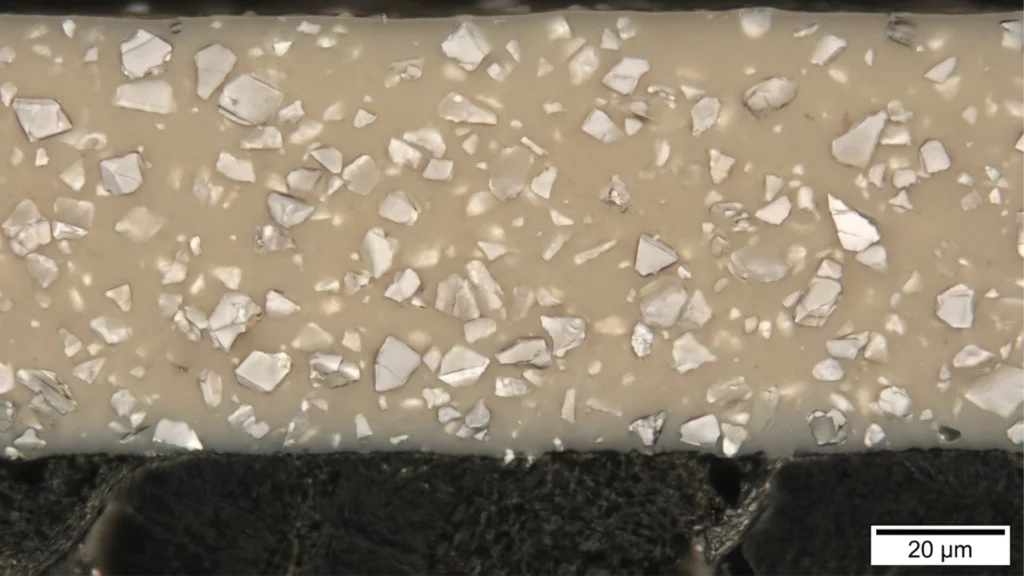
Thermoplastic compounding utilizes micronized gypsum as mineral filler in polyolefins (PP, PE), PVC and engineering resins. Loading levels of 20-40% by weight reduce resin consumption while improving dimensional stability and heat deflection temperature. The calcium sulfate crystal structure provides moderate reinforcement without excessive abrasion of processing equipment—hardness of 2 Mohs versus 3-4 for calcium carbonate.
Injection molding grades require 325-mesh or finer sizing to prevent nozzle clogging and ensure uniform melt dispersion. Surface-modified gypsum treated with titanate or zirconate coupling agents enhances polymer-filler interfacial adhesion, translating to 10-15% tensile strength improvements compared to untreated fillers. These treatments also reduce moisture pickup, critical for polyamide and polyester applications where hydration causes dimensional changes.
PVC pipe and profile extrusion incorporates micronized gypsum as processing aid and cost reducer. The particles act as nucleating sites during crystallization, refining grain structure and improving impact strength at low temperatures. Heat stability remains acceptable up to 200°C—adequate for PVC processing but limiting application in higher-temperature engineering thermoplastics.
Our Micronized Gypsum product line offers consistent particle size distribution optimized for polymer compounding, with certified moisture content below 0.3% and alkaline earth metal purity exceeding 96%.
Pharmaceuticals: Excipient and Tableting Aid
Pharmaceutical-grade micronized gypsum (USP calcium sulfate dihydrate) functions as inert diluent, tablet binder and controlled-release matrix in solid dosage forms. Particle size specification demands d50 of 10-25 microns with narrow distribution—broader ranges cause content uniformity issues and variable dissolution profiles. Heavy metal limits must meet ICH Q3D guidelines: lead <10 ppm, arsenic <3 ppm, mercury <3 ppm.
Direct compression tablet formulations incorporate 30-60% micronized gypsum as primary diluent, exploiting its excellent compressibility and low ejection forces. The dihydrate crystal structure undergoes slight plastic deformation under compression, creating interparticulate bonding without requiring wet granulation. This simplifies manufacturing and improves stability of moisture-sensitive APIs.
Sustained-release matrices use micronized gypsum as hydrophilic carrier for water-soluble drugs, forming gel barriers that control diffusion rates. Dissolution testing shows linear release kinetics over 8-12 hours, suitable for twice-daily dosing regimens. The calcium and sulfate ions released during dissolution are physiologically inert at tablet-dose levels, presenting no safety concerns.
Paper Industry: Coating and Filling
Paper manufacturing consumes micronized gypsum primarily as filler in uncoated printing grades and as component in coating formulations for glossy papers. Loading rates of 8-15% improve opacity, brightness and printability while reducing wood pulp requirements. The platy morphology aligns parallel to sheet surfaces during wet-end formation, creating smoother surfaces compared to granular fillers.
Coating color formulations for lightweight coated (LWC) papers blend micronized gypsum with clay, calcium carbonate and binders to achieve target coat weight and gloss. Gypsum content typically ranges 10-20% of total pigment, contributing cost efficiency and controlled porosity. The sulfate anions provide anionic charge that improves latex binder distribution and prevents pigment agglomeration.
Specialty applications include gypsum-based barrier coatings for liquid packaging board. The mineral forms continuous films when calendered, reducing grease and moisture transmission without requiring polymer coatings. This approach offers sustainability advantages in food-contact applications where recyclability and compostability drive material selection.
For manufacturers seeking reliable filling materials, our Finishing Plaster provides comparable particle fineness with optimized rheology for construction applications.
Ceramics: Body Formulation Enhancement
Ceramic body compositions incorporate micronized gypsum (5-12%) to control drying shrinkage, improve green strength and modify fired properties. The calcium sulfate acts as temporary binder during shaping operations, decomposing during bisque firing (600-800°C) to leave porous structure that facilitates glaze adhesion. Particle size below 325 mesh ensures uniform distribution through clay matrices without creating weak planes.
Sanitaryware and tableware producers use micronized gypsum in casting slips to adjust viscosity and sedimentation behavior. The plate-like particles increase slip stability during mold filling while reducing water demand—typical additions of 0.5-2% lower moisture content by 1-3 percentage points, shortening demolding times and energy consumption in drying operations.
Wall tile bodies benefit from gypsum additions that reduce firing shrinkage and improve size consistency. The sulfate thermal decomposition creates microporosity that accommodates glaze thermal expansion, reducing crazing defects. However, maximum addition rates are limited to 8-10% because excessive gypsum causes bloating defects when sulfur trioxide (SO₃) gases cannot escape during vitrification.
Quality Standards: Mesh Size, Purity and Chemical Composition
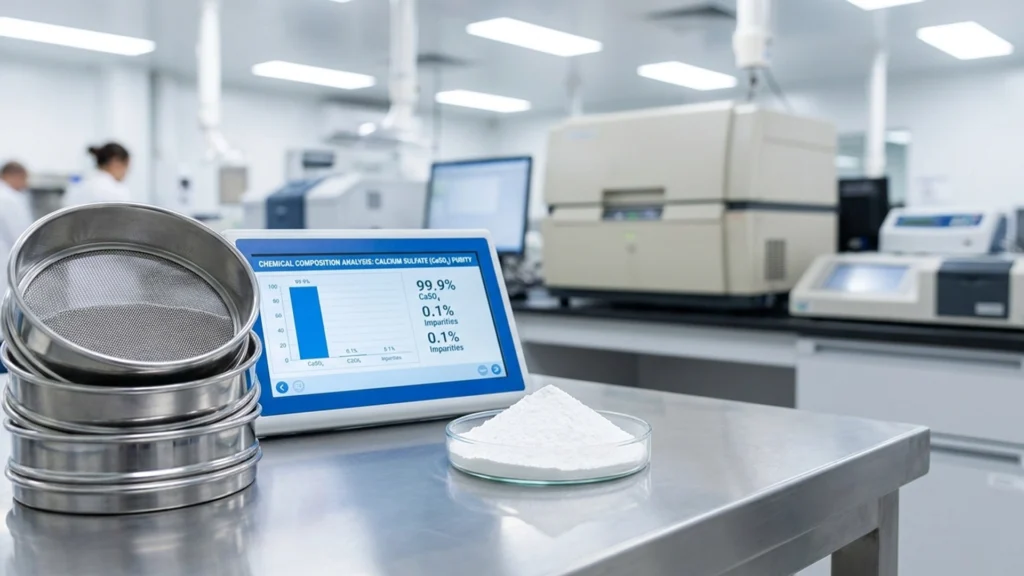
Industrial micronized gypsum must satisfy multiple specification parameters beyond particle size. Chemical purity affects performance across applications—cement requires minimum 90% CaSO₄·2H₂O, while pharmaceutical grades demand ≥98%. Impurity limits target specific contaminants: silica content should stay below 3% to prevent abrasiveness in paint and polymer applications, while iron oxide (Fe₂O₃) must remain under 0.1% to prevent discoloration in white-coating formulations.
Particle size distribution measurement uses laser diffraction (ISO 13320) or sieve analysis (ASTM C136) depending on application requirements. Laser methods provide detailed distribution curves showing d10, d50 and d90 values—pharmaceutical specifications commonly require d50 = 15±3 microns with d90 <45 microns. Sieve analysis confirms top-size cutoff: 325-mesh material should exhibit >95% passing 44-micron screen.
Moisture content verification follows loss-on-drying protocols (ASTM D3173), targeting <0.5% for free-flowing powder. Bulk density ranges 0.7-0.9 g/cm³ for micronized grades versus 1.1-1.3 g/cm³ for granular gypsum—the lower density reflects increased void volume between fine particles. Oil absorption (ASTM D281) measures surface area indirectly: values of 15-25 g oil/100g gypsum indicate suitable fineness for paint applications, while pharmaceutical excipients target 8-12 g/100g.
Whiteness specifications use Hunter Lab* color space or ISO brightness testing. Paint-grade micronized gypsum should achieve L* values >90 (near-white) with minimal yellowness (b* <3). Agricultural and cement grades tolerate lower brightness (L* 75-85) with higher iron oxide discoloration, trading appearance for cost efficiency.
Sourcing Micronized Gypsum: Supplier Selection Criteria
B2B procurement of micronized gypsum demands rigorous supplier qualification focused on process consistency, analytical capabilities and logistics reliability. Primary evaluation criteria include particle size control (±3 micron variation in d50 between lots), chemical purity verification through third-party testing and moisture management preventing hydration or caking during storage.
Technical data sheets should specify complete particle size distribution, not just nominal mesh rating—marketing claims of “325 mesh” may conceal bimodal distributions or excessive fines that impact processing. Request laser diffraction data with d10/d50/d90 values and certified sieve analysis for verification. Chemical composition reporting must include minor elements affecting performance: magnesium content, chloride levels and organic matter that influences color and odor.
Manufacturing process transparency indicates supplier competence. Jet-milled products offer superior particle uniformity compared to roller-milled alternatives, while air classification adds cost but ensures tight top-size control. Surface treatment capabilities (stearic acid coating, silane modification) expand application potential, though treatments must be disclosed to avoid compatibility issues with customer formulations.
Quality management certification (ISO 9001) provides baseline assurance, while industry-specific accreditations (GMP for pharmaceuticals, FSSC 22000 for food-contact grades) demonstrate regulatory compliance. Supply chain resilience matters equally—assess inventory buffers, alternative sourcing options and logistics partnerships enabling consistent delivery schedules.
Our Raw Gypsum Stone and Betogips Gypsum serve as feedstock for micronization processes, ensuring vertical integration and quality traceability from mine to finished powder.