
They are the same mineral. Plaster of Paris — POP, as most sites call it — and gypsum plaster are both calcined gypsum. The difference is how they were heated during production. That single difference changes setting speed, strength, and where each one belongs.
POP sets very fast and stays relatively soft. Building plaster sets slowly enough to work a wall, and finishes harder. That is the plaster of Paris vs gypsum plaster answer in one line. Is plaster of Paris the same as gypsum plaster? Chemically yes, practically no, and most POP vs gypsum plaster disputes on site come from treating them as interchangeable.
This guide covers why they differ and what the grades mean on a label. It then sets out where each belongs on a project, and what drives the cost.
Same Mineral, Different Calcination
Buyers who order by grade rather than by generic name receive the material they specified — the control is the product designation, not the word “plaster”.
Both products are calcium sulphate hemihydrate (CaSO₄·½H₂O). Both are made by calcining gypsum rock (CaSO₄·2H₂O), which means heating it to drive off most of the chemically bound water. Add water on site and the hemihydrate returns to dihydrate, and the material sets.
So the plaster of Paris vs gypsum plaster difference is not the mineral at all. It is the calcination route, and the crystal form that route produces. Everything else follows from that: water demand, density, strength, and setting speed.
Put plainly, the difference between plaster of Paris and gypsum plaster is a production difference, not a material one. This matters commercially because “gypsum plaster” on a delivery note tells a supervisor almost nothing. It is a family name, not a specification.
What “plaster of Paris” actually means
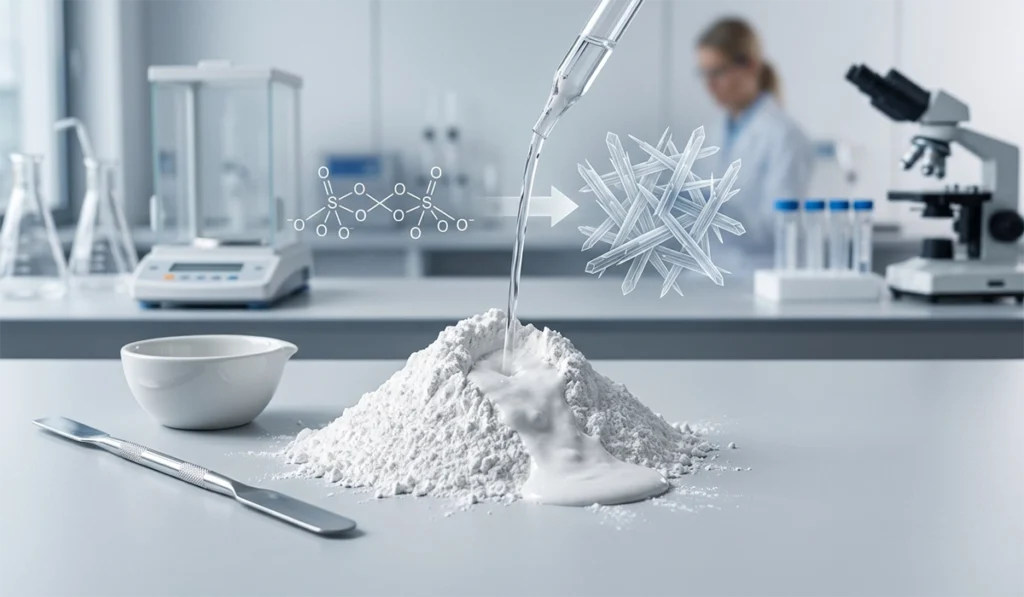
The name comes from Montmartre in Paris, where gypsum was quarried and calcined at scale. The material itself is beta hemihydrate, produced by dry calcination.
In practice, POP means an unretarded casting plaster. ASTM C59/C59M covers gypsum casting plaster and gypsum moulding plaster. It requires a set of not less than 10 and not more than 50 minutes under its stated procedure. Plaster of Paris uses cluster around that fast set: mouldings, cornices, casts, and repairs.
What “gypsum plaster” means on a product label
Building gypsum plaster is the same beta hemihydrate with additives — principally a retarder to slow the set so a wall can be worked.
Standards separate the categories properly. EN 13279-1 classifies products as A for gypsum binders, B for gypsum building plasters, and C for special plasters. ASTM C28/C28M covers gypsum plasters for building use, while C59/C59M covers casting and moulding. Order by the product designation and the standard, not by the generic name.
Alpha vs Beta Hemihydrate: The Reason They Behave Differently
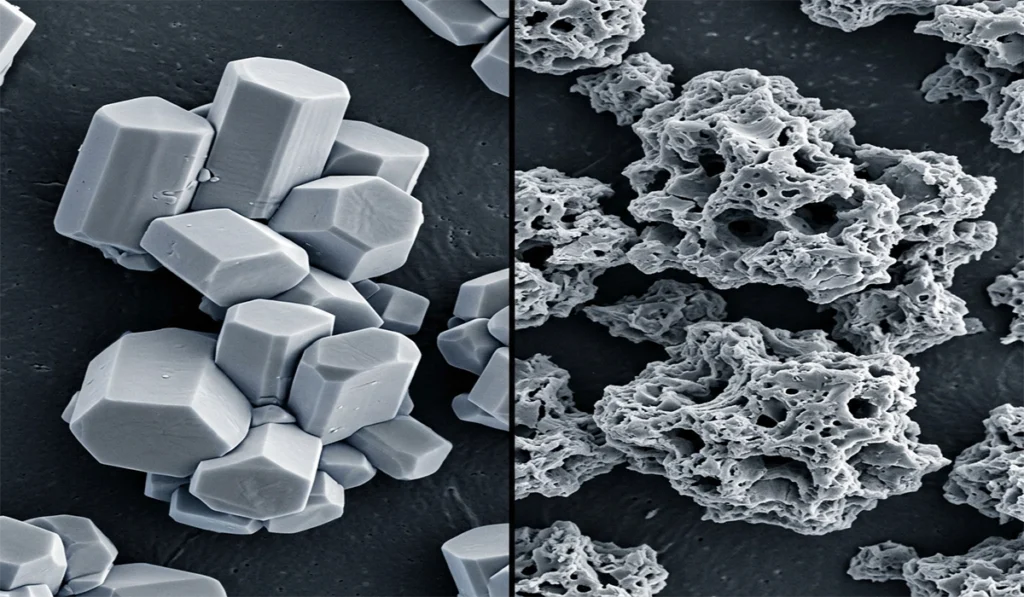
Specifiers who select by crystal grade rather than price get the strength they expected. The difference between alpha and beta hemihydrate gypsum is measurable, not marketing.
Two calcination routes produce two crystal forms. Beta hemihydrate forms in dry heat. Its crystals are small, irregular and porous, with a high specific surface area. Alpha hemihydrate forms under steam pressure. Its crystals are larger and better formed.
Most competing comparisons stop at two columns. Adding the alpha grade is what makes the choice clear, because it shows that “stronger” is available if the application justifies it.
| Property | Plaster of Paris (beta, unretarded) | Gypsum building plaster (beta, retarded) | High-strength gypsum (alpha) |
| Calcination route | Open kettle / rotary kiln, dry | Open kettle / rotary kiln, dry, plus additives | Autoclave, steam or suspension |
| Crystal form | Small, irregular, porous | Small, irregular, porous | Larger, denser, well formed |
| Water demand | High | High | Low |
| Setting speed | Very fast | Controlled / retarded | Moderate |
| Strength when set | Lowest | Moderate | Highest |
| Typical use | Casting, mouldings, cornices, repairs | Wall and ceiling plastering | Precision moulds, GRG, high-strength work |
| Relative cost | Lowest | Low to moderate | Highest |
| Availability | Very wide | Very wide | Limited |
For precision moulds and glass reinforced gypsum (GRG), the alpha grade is the working choice. A high strength gypsum product sits in that category — ours is high-strength gypsum.
How each one is produced
Beta hemihydrate is made by dry calcination in an open kettle or a rotary kiln. Water leaves the crystal as steam, and the crystal fractures as it goes. The result is porous and irregular.
Alpha hemihydrate is made in an autoclave above 100 °C, in steam or in suspension. The gypsum dissolves and recrystallises rather than simply drying out. That slower route builds larger, better-formed crystals.
The economics follow the equipment. Autoclaving costs more and is less widely available, so alpha grades carry a premium. Beta dominates commodity construction use for that reason alone.
Water demand, density and strength
Crews who follow the declared water-to-plaster ratio avoid the chalky, weak surfaces that extra mixing water guarantees.
Porous crystals with a high surface area need more water to make a workable slurry. That is the whole mechanism. Beta hemihydrate has a high water demand; alpha, with its denser crystals, needs less.
Here is the part most people miss. The extra mixing water does not stay in the set material — it evaporates, and it leaves voids behind. Those voids are the direct reason a high-water-demand plaster is weaker. On plaster of Paris compressive strength vs gypsum plaster, that is the whole explanation: same mineral, more voids, less strength.
Setting Time and Working Time: The Practical Gap
Crews who match batch size to working time stop throwing away stiffened material — the cost is real and quotations rarely show it.
Why does plaster of Paris set so fast? Because nothing is slowing it down. The hemihydrate rehydrates as soon as it meets water, and unretarded POP has no additive to delay that reaction.
Initial set is when the mix stops being workable. Final set is when it has hardened. For POP those points arrive quickly, which is exactly what a caster wants and exactly what a plasterer does not.
This is why crews mix POP in small batches. A large batch goes off in the bucket before it can be used, and the material is thrown away. Retarded building plaster exists to remove that problem. Use retarded gypsum building plaster wherever the applied area exceeds what a team can finish inside the working time of unretarded plaster. Controlling set on site is a separate subject, worth reading before a large pour.
Where Each Material Belongs on a Real Project
Supervisors who match the grade to the exposure avoid the soft-wall failures that follow buying on price alone.
The decision is simpler than the chemistry suggests. Fast set and low strength suit work that is cast, shaped and not touched afterwards. Slower set and higher strength suit surfaces that people lean on, clean, and knock furniture against.
The gypsum plaster vs POP for false ceiling question has no single answer, because it depends on what the ceiling is. Which is better, POP or gypsum plaster for false ceiling work? A decorative moulded ceiling is casting work. A flat plastered soffit is plastering work. The same room can need both, and choosing the right gypsum product usually comes down to that distinction.
False ceilings, cornices and mouldings
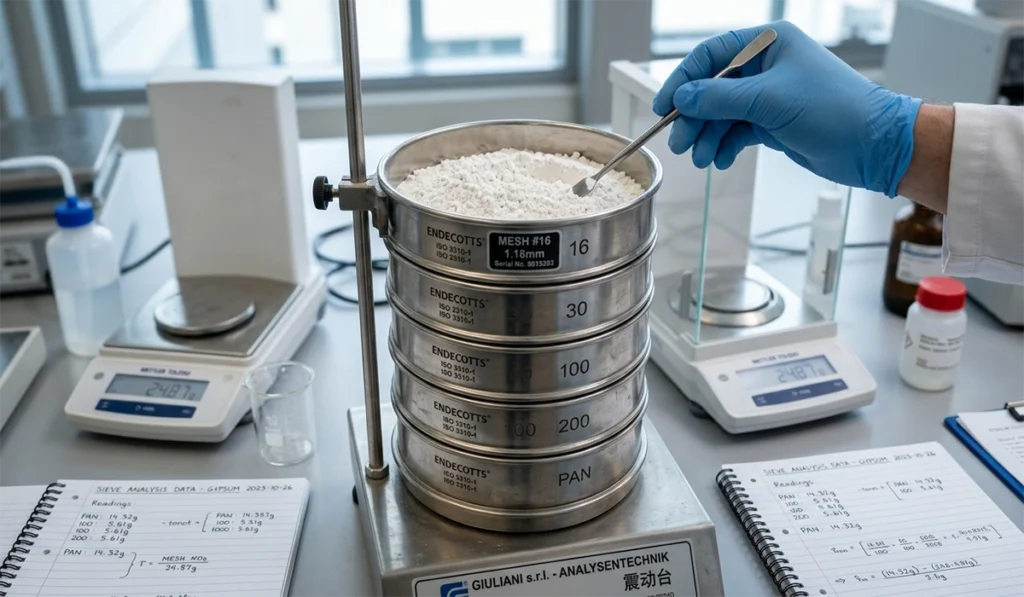
POP false ceiling work plays to the material’s strengths. Fast set means a mould can be struck and reused quickly, and fine detail reproduces well because the slurry flows before it stiffens.
Cornices, ceiling roses, and ornamental detail are all casting work. Strength matters less because nothing loads these elements once fixed. For fine detail, micronized gypsum for fine decorative work gives a smoother reproduction of the mould face.
Use POP when the element is cast, decorative, and protected from impact.
Wall and ceiling plastering
What is gypsum punning? In India and Pakistan, punning means the thin white finishing coat applied over a base plaster to give a smooth, paint-ready surface.
Gypsum plaster for walls needs working time and hardness. Building plaster provides both. A hand-applied gypsum plaster base with a finishing plaster (white gypsum) skim is the standard build-up. Then applying a finish coat correctly matters as much as the material itself.
Use building plaster whenever the surface is a wall or a flat ceiling that people will touch.
Cost, Coverage and Labour: The Honest Comparison
Contractors who price wastage and rework alongside the bag rate compare the two materials honestly — the bag rate alone is misleading.
Prices move constantly and vary by market, so figures here would date the article. Compare the drivers instead. On gypsum plaster vs POP cost per square feet, four things decide the total.
Material rate. POP is usually cheaper per bag. That is the number most quotations show, and it is the least important of the four.
Wastage. Unretarded plaster that stiffens in the bucket is thrown away. On large areas this is routine, and it quietly erases the material saving.
Labour hours. Working time drives productivity. A crew that can lay a full batch works faster than a crew mixing small batches continuously.
Rework risk. A soft wall that dents within a year is re-done at full cost. That risk is the largest number in the comparison, and it never appears in the quote.
To estimate quantities properly, calculate how much material you need before comparing rates.
Where People Get This Wrong
Site teams who check the grade on arrival avoid most of the failures below — the check takes seconds and the failures take months to appear.
Plaster goes off in the bucket. Unretarded POP was mixed in a large batch. Use retarded building plaster for large areas.
The wall dents and marks easily. Can plaster of Paris be used on walls? It can be applied, but it should not be specified as a wall finish. It is softer than building plaster, and the damage shows within a year.
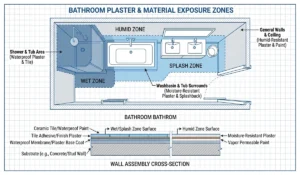
The surface fails in a bathroom. Is plaster of Paris waterproof? No, and neither is standard gypsum building plaster. Can you use plaster of Paris in a bathroom? Only within a moisture-appropriate system designed for the exposure.
A repair patch dries a different shade. A different grade or batch was used. Keep material from the same batch for visible repairs.
The set is weak and chalky. Too much mixing water was added for workability. The extra water leaves voids.
Ceiling detail cracks at the joints. Movement combined with a brittle, low-strength mix. Select the grade by strength requirement rather than habit.
The wrong material arrives. “Gypsum plaster” was ordered with no grade named. Order by designation and standard.
How to Specify and Buy the Right Material
Buyers who name the standard in the order receive comparable material from every supplier they approach.
The plaster of Paris vs gypsum plaster decision resolves into four questions. Is the work cast or applied? Will the surface take impact? How large is the area relative to working time? And does the exposure involve moisture?
Then specify properly. Name the product designation and the standard. That means ASTM C28/C28M or C59/C59M, EN 13279-1 class A, B or C, or IS 2547 and IS 2542 in India. State the grade, not just “gypsum plaster”. Confirm the declared setting time and the water-to-plaster ratio. And check the delivery against what was ordered.
Rezvan Mines has produced and processed gypsum for over 40 years. Before ordering, it helps to know how to read the specification before you buy. You can also request a sample or a quotation for any grade in the range.
Conclusion
Same mineral, different calcination, different job. POP is beta hemihydrate with nothing slowing it down: fast, cheap, and best suited to casting and decorative work. Building plaster is the same material retarded and modified for walls. Alpha grades exist where strength genuinely matters.
The plaster of Paris vs gypsum plaster choice comes down to what the surface has to survive, not the price per bag. Then order by designation and standard so the right grade actually arrives. Request a sample or a quotation when you know which grade the job needs.
FAQ
Is plaster of Paris the same as gypsum plaster?
Chemically they are the same compound, calcium sulphate hemihydrate, made by calcining gypsum. Practically they differ. POP is unretarded and sets in minutes; building plaster contains a retarder and additives so a wall can be worked and finishes harder.
Which is better for a false ceiling, POP or gypsum plaster?
It depends on the ceiling type. Cast decorative elements such as cornices and ceiling roses suit POP, because fast set speeds mould turnaround. A flat plastered soffit needs building plaster for working time and surface hardness. Many ceilings use both.
Why does plaster of Paris set so quickly?
Because nothing delays the reaction. Hemihydrate rehydrates to dihydrate as soon as it meets water, and unretarded POP contains no additive to slow that. Building plaster includes a retarder specifically to extend working time on large applied areas.
Can plaster of Paris be used on walls?
It can be applied, but it should not be specified as a wall finish. POP is softer than building plaster, so walls dent and mark within a year of normal use. Use building plaster for any surface people will touch or clean.
Is plaster of Paris waterproof?
No. Neither POP nor standard gypsum building plaster is waterproof, and both soften with prolonged wetting. Bathrooms, kitchens and external areas need a moisture-appropriate system designed for that exposure, not an untreated gypsum plaster of either type.
Which one costs less to install?
POP usually costs less per bag, but that is only one of four drivers. Wastage from stiffened batches, labour hours lost to small-batch mixing, and rework on soft walls all favour building plaster on applied surfaces. Compare total installed cost.