
If you searched for “wall putty”, you may not mean the same thing your supplier means. In India, Pakistan and much of South Asia, wall putty almost always means white cement-based putty. Elsewhere it can mean a gypsum-based powder, an acrylic paste, or a polymer-modified product. Four different materials share one name. Some markets shorten it further, to wall powder or simply putty, which hides the difference completely.
That gap causes real problems. A buyer asks for wall putty powder, receives a technically excellent product, and applies it to an exterior wall it was never designed for. The next rainy season removes it.
This guide compares all four families honestly. It says where each one wins, and where each one loses. What is the difference between wall putty and white cement is answered directly, because that single confusion drives most wrong purchases. By the end you should know which family your wall needs, and be able to specify it properly.
What Wall Putty Actually Is — and What It Is Not
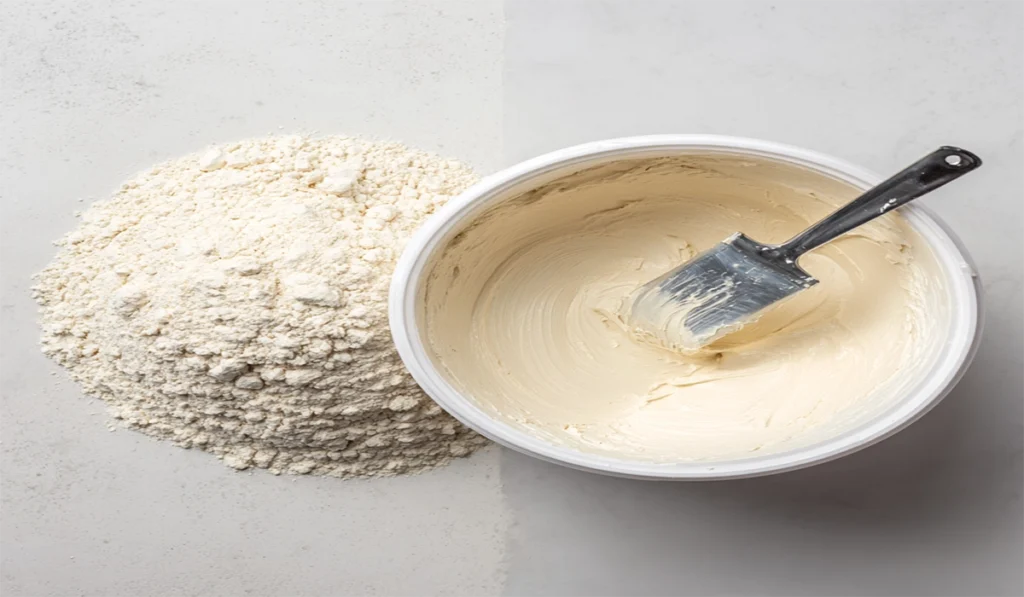
Wall putty is a surface preparation layer. It is not paint, and it is not primer. Its job is to fill minor imperfections and give a smooth, uniform, sealed base so that paint looks even and lasts. Interior wall finishing depends on that base more than most buyers expect: paint will faithfully reproduce every flaw underneath it.
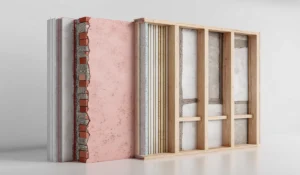
The putty vs primer distinction matters on site, because skipping one and expecting the other to cover for it is a common mistake. Putty levels the surface. Primer seals and promotes adhesion between putty and paint. Paint provides colour and protection. The standard system is two coats of putty, then one coat of primer, then two coats of paint. Each layer does a different job, and none of them substitutes for another.
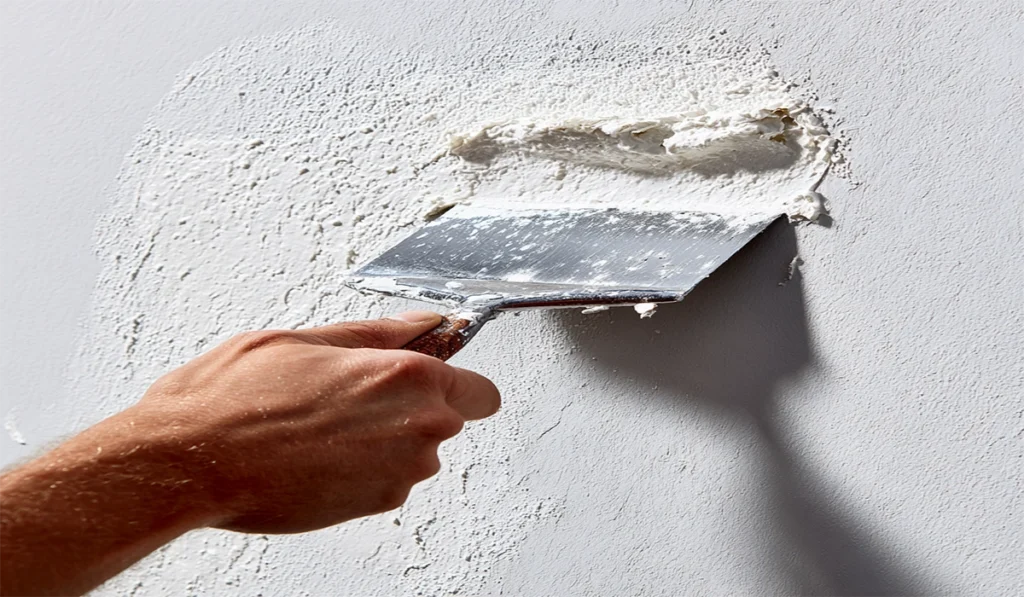
Wall putty is also not plaster. Plaster builds out a surface in thickness, often 10 mm or more. Wall putty powder is mixed into a thin finishing layer, commonly around 1–2 mm, applied with a trowel or spatula and sanded once dry. Using putty to correct a badly out-of-true wall is expensive and it cracks.
Wall putty application is therefore a finishing operation, not a building-out one. Can you apply putty directly on plaster? Yes, provided the plaster has cured. That condition does more damage when ignored than any product choice, and Section 5 explains why.
The Four Families of Wall Putty
Four binder families dominate the market. Most powder wall putty sold in South Asia belongs to the first of them. The binder decides almost everything that follows: whether the product survives outdoors, how fast it dries, how smooth it finishes, and which substrates suit it. The types of wall putty below are grouped by binder for exactly that reason.
Read the table by the row that matters to your job. For most buyers that row is “Exterior”. It eliminates two of the four families immediately.
Reference: ASTM C28/C28M Standard Specification for Gypsum Plasters — the ASTM specification covering gypsum plaster types and their tested requirements.
| Factor | White cement-based | Gypsum-based | Acrylic / ready-mixed | Polymer-modified |
| Binder | White portland cement | Calcined gypsum | Acrylic emulsion | Cement plus polymer |
| Supplied as | Powder | Powder | Ready-mixed paste | Powder |
| Interior | Yes | Yes | Yes | Yes |
| Exterior | Yes | No | No | Yes |
| Wet or damp areas | Suitable | Not suitable | Not suitable | Suitable |
| Drying speed | Slower | Faster | Fast | Slower |
| Finish smoothness | Good | Very smooth, minimal sanding | Very smooth | Good |
| Behaviour over cement alkalinity | Compatible | Resists alkalinity | Varies | Compatible |
| Best substrates | Masonry, cement plaster, concrete | Plasterboard, gypsum plaster, interior plastered walls | Interior, over sound existing finishes | Smooth concrete, old paint, crack-prone surfaces |
| Relative cost | Low to moderate | Low to moderate | Highest | Moderate |
White cement-based putty
White cement putty is built on white portland cement, fine mineral fillers such as calcium carbonate or dolomite, and water-soluble polymer binders. White portland cement itself is a specified material: in India it is covered by IS 8042, White Portland Cement — Specification.
This family dominates the Indian market, and for a defensible reason. It is water-resistant and suitable for both interior and exterior walls. That single property makes it the safe default when a buyer does not know the exposure.
What is the difference between wall putty and white cement, then? White cement is one ingredient. Wall putty is a formulated dry mix built around it, with fillers and polymers added for workability, water retention and adhesion. Buying white cement and expecting putty performance does not work.
The trade-off is finish and speed. It dries more slowly than gypsum-based products and needs more sanding to reach a comparable smoothness.
Gypsum-based putty
Gypsum based putty uses calcined gypsum — calcium sulphate hemihydrate — as its binder, with additives to control set and improve workability. It is designed for interior use on plasterboard, gypsum plaster and interior plastered walls.
Its advantages are real and specific. It dries faster than cement-based putty, which shortens the wait between coats. It gives a very smooth white finish that needs minimal sanding. On an occupied building that matters more than it sounds: less sanding means dramatically less airborne dust through finished rooms. It also resists the alkalinity of cement surfaces.
Is gypsum putty better than cement putty? For interior work on the right substrate, often yes. For anything exposed to rain or regular wetting, no — and this is where honesty serves you better than a sale. Gypsum-based putty is an interior product.
Rezvan Mines produces our gypsum-based putty powder for interior use. For exterior work, specify a cement-based or polymer-modified product instead. If you have already settled on gypsum, see satin gypsum compared with putty powder for the next choice.
Acrylic and ready-mixed putty
Acrylic wall putty is different in kind from the other three. It arrives as a water-based ready-mixed paste built on an acrylic emulsion, not as a powder you mix on site. There is no dry mix and no mixing ratio to get wrong.
That convenience is its main argument. It dries quickly, finishes very smooth, and removes site-mixing error from the job. For small interior areas and refurbishment over sound existing finishes, it is a sensible choice.
The limits are equally clear. It is an interior product only. It typically costs more than powder products, and the gap widens on large areas because you are paying to ship water. Its behaviour over fresh, highly alkaline cement surfaces varies by formulation, so check the manufacturer’s guidance rather than assuming.
Powder putty and ready-mixed paste therefore differ in logistics as much as chemistry. Powder travels and stores better; paste saves labour.
Polymer-modified putty
Polymer modified putty sits between basic cement putty and acrylic products. The base is cement, with redispersible polymer powder (RDP) and cellulose ethers added at higher levels than a basic formulation carries.
Those additions buy specific improvements: better crack resistance, better bonding to smooth concrete and old paint, improved water resistance, and reduced efflorescence. In practice this is the family to reach for when the substrate is difficult rather than when the exposure is severe.
It suits exterior work and damp areas. It also solves the low-suction substrate problem described in Section 3, which basic cement putty handles poorly.
The cost sits above basic cement putty and below acrylic. Drying is slower than gypsum-based products, because cement hydration sets the pace rather than gypsum set.
How to Choose: Match the Putty to the Wall
Knowing how to choose wall putty comes down to two questions, asked in order. Answer them and the four families reduce to one or two candidates.
The first question is exposure. The second is substrate. Price is the third question, not the first, because a cheaper bag on the wrong wall costs more than the saving. Choosing wall putty for interior walls is a different decision from choosing for a boundary wall. Which wall putty is best for interior walls therefore has its own answer, and the difference is not quality — it is chemistry.
Interior or exterior — the first question
Can wall putty be used on exterior walls? Only two of the four families can. Cement-based and polymer-modified products are suitable for exterior use. Gypsum-based and acrylic products are not.
Here is the decision threshold, stated plainly. Choose a cement-based or polymer-modified putty for any surface that will be rained on or regularly wetted. Gypsum-based putty is an interior product.
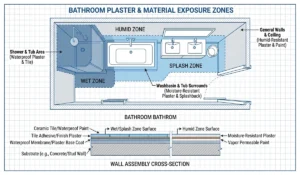
Treat bathrooms, kitchen splash areas and unheated damp rooms as wet exposure, not as interior. Many gypsum-based putties are not rated for wet areas, so check the declared suitability rather than assuming that “interior” covers it.
Exterior failures are rarely subtle. An interior-grade product on an outside wall usually survives until the first monsoon or the first winter, then flakes off in sheets.
The substrate: new plaster, concrete, plasterboard, old paint
Substrate suction is the property that decides adhesion. A porous surface such as new cement plaster draws water out of the putty. A smooth, dense surface such as cast concrete draws almost none.
Both extremes cause problems, and they need different answers. High-suction substrates pull water out too fast, so the putty stiffens before it can be worked. Low-suction substrates give the putty nothing to grip, so it can debond later. Smooth concrete and sound old paint are the classic low-suction cases, and polymer-modified products exist largely to solve them.
Alkalinity is the second substrate factor. Fresh cement plaster is strongly alkaline, and that alkalinity can attack unsuitable finishes. Gypsum-based putty resists cement alkalinity well, which is one reason it performs on plastered interior walls.
New plaster versus an old painted surface is therefore a genuine fork. New plaster needs curing time. Old paint needs adhesion testing.
Coats, Coverage and the Finishing System
How many coats of wall putty are needed? Two, in almost every normal case. The two-coat system is not a convention — it exists because one thick coat behaves differently from two thin ones.
Apply the second coat at right angles to the first. Each coat stays within the thin range, commonly around 1–2 mm, and is sanded once dry. One thick coat shrinks unevenly as it dries and cracks across the surface. Two thin coats do not, because each layer dries through its full depth. This is the single most common workmanship failure in the trade.
Wall putty coverage per kg is a real factor in choosing, and it varies with substrate roughness, coat thickness and product density. The principle is simple: a rougher, more absorbent wall consumes more material at the same nominal thickness. Do not budget from a headline figure alone. Use the declared value on the product’s technical data sheet, and calculate how much you need against your actual wall area.
Then complete the system. Putty, primer, paint — in that order, with none skipped. Primer is what makes the paint film even over a porous putty surface. Skipping it is the usual reason a finish looks patchy despite good putty work. For related technique on the coat beneath, see applying the finish coat.
Where Wall Putty Fails
Most putty complaints are not product defects. They are mismatches between product and exposure, or between product and workmanship. Each failure below has a root cause and a decision that prevents it.
| Failure | Root cause | The decision that prevents it |
| Putty peels or flakes off | Interior-grade product used on an exterior or damp wall | Match the product to the exposure before the price |
| White salt deposits push through the finish | Efflorescence from an uncured or damp substrate | Let cement plaster cure fully before puttying |
| Fine cracking across the surface | One thick coat instead of two thin ones | Apply thin coats within the declared thickness |
| Poor adhesion on smooth concrete | Low-suction substrate with no bonding preparation | Use a polymer-modified product or prepare the surface |
| Paint finish looks patchy | Putty sanded unevenly, or primer skipped | Keep to the full system: putty, primer, paint |
| Surface is soft and marks easily | Wrong grade for the traffic and exposure | Specify by location, not by the cheapest bag |
| Product does not match the last delivery | Different grade or batch supplied | Order by product designation, and check the batch |
| Excessive sanding dust in an occupied building | Coarse product needing heavy sanding | Choose a fine, smooth-finish grade for occupied interiors |
Why is my wall putty peeling off is the question behind the first row, and the answer is usually exposure, not quality. An interior-grade product on a wall that gets wet will fail regardless of how good it is.
The efflorescence row deserves detail, because it appears months later and looks like a product fault. Efflorescence needs three conditions together: soluble salts in the wall, enough moisture to dissolve them, and a path for that solution to migrate to the surface and evaporate. Fresh cement plaster supplies all three. As it cures it releases moisture carrying dissolved salts, which push outwards and crystallise as white deposits through whatever finish sits on top. The prevention is patience: a 28-day cure is the commonly stated requirement for cement plaster before puttying. Remove the deposits and they return, because the surface was never the problem.
The cracking row has the same character. A thick coat looks like better value and feels more robust when applied. It shrinks unevenly as the outer skin dries ahead of the material underneath, and the surface crazes. Two thin coats dry through their full depth and do not.
Painters and plasterers often disagree about which putty to use, and both are being rational. The plasterer optimises for workability and open time on the wall. The painter optimises for a fine, even, sealed surface that takes paint predictably. A product that suits one can frustrate the other, which is why specifying by declared properties settles the argument better than preference does.
Sanding dust is the failure nobody budgets for. On an occupied building, a coarse product needing heavy sanding puts fine dust through finished rooms, furniture and air handling. Grade choice at order time is what prevents it.
What to Check Before You Buy
Four properties separate a good bag from a disappointing one, and none of them is visible in the bag.
Whiteness affects how many coats of paint you need over the putty. A whiter base gives better colour development, particularly under pale or pastel emulsion paint. It is measured and declared, so ask for the figure rather than judging by eye.
Fineness governs the finish and the sanding effort. A finer product levels more smoothly and needs less sanding to reach a paintable surface, which is why it matters so much in occupied buildings.
Binder type and substrate suitability decide whether the product belongs on your wall at all. Ask which binder it uses and which substrates and exposures the manufacturer rates it for. For the full checklist, see what to check on the specification.
The difference between putty powder and joint filler is worth clearing up here, because the two get ordered interchangeably and should not be. Putty covers a whole wall in a thin, uniform layer to prepare it for paint. A joint filler powder fills board joints and localised gaps, and a jointing compound embeds tape and builds a flush joint over plasterboard. They are formulated for different jobs: one for area coverage, the others for filling and jointing. Using a joint product across a whole wall is slow and expensive; using putty as a joint filler cracks.
Buying in Bulk: What to Specify
For a bulk order, specify the product rather than the category. “Wall putty powder” on a purchase order is not a specification, because it describes four different materials.
State four things: the binder family, the intended exposure, the substrate, and the pack size. Add the product designation and ask for batch identification on delivery, so that a later query can be traced to a production run. That is what prevents the “does not match the last delivery” complaint.
Ask for a technical data sheet with the quotation, not after it. The declared values on that sheet are the only performance numbers worth planning against. Wall putty powder price varies with binder, additive content and packaging, and what drives the price is covered separately.
Rezvan Mines supplies in bulk and bagged formats, with private label and custom packaging available, and a technical data sheet with every quotation. You can request a sample to test against your own substrate before committing to a load.
Conclusion
Four materials share the name wall putty, and choosing between them is a two-question job. Ask the exposure first: cement-based and polymer-modified products go outside and into damp areas, while gypsum-based and acrylic products are interior only. Ask the substrate second: high-suction plaster, low-suction concrete and old paint each favour a different family.
Get those two right and the rest follows. Two thin coats rather than one thick one, a full cure on cement plaster before you start, and the complete putty-primer-paint system with nothing skipped. Specify by binder, exposure and substrate rather than by the category name, and request a sample to test on your own wall before you order in volume.
FAQ
What is wall putty made of?
A binder plus fine mineral fillers and polymer additives. The binder is white portland cement, calcined gypsum, acrylic emulsion, or cement with added polymer. Fillers are typically calcium carbonate or dolomite. Additives such as HPMC control water retention and adhesion.
Is gypsum putty better than cement putty?
For interior walls, often yes: it dries faster, finishes very smooth with minimal sanding, and resists cement alkalinity. For exterior or damp surfaces, no. Gypsum-based putty is an interior product and cement-based putty is not.
Can wall putty go on an exterior wall?
Only cement-based or polymer-modified putty. Gypsum-based and acrylic products are interior only and will fail outdoors. Check the manufacturer’s declared exposure rating before ordering, since “interior” does not always cover damp interior areas either.
How many coats do I need?
Two thin coats in almost all cases, each commonly around 1–2 mm, with the second applied at right angles to the first. One thick coat shrinks unevenly and cracks. Follow with one primer coat and two paint coats.
Can I apply putty straight onto fresh plaster?
Not onto uncured plaster. Cement plaster should be fully cured first, with 28 days the commonly stated requirement. Applying putty sooner traps moisture and dissolved salts, which later push through the finish as white efflorescence deposits.
Why is my putty peeling?
Most often an interior-grade product used on an exterior or damp wall. Other causes are poor adhesion on a smooth low-suction substrate, or application over a dusty or uncured surface. Match product to exposure, and prepare the substrate.
What is the difference between wall putty and joint filler?
Putty covers whole walls in a thin uniform layer to prepare them for paint. Joint filler fills localised gaps and board joints. Jointing compound embeds tape over plasterboard joints. They are formulated for different jobs and are not interchangeable.
What is the difference between putty and primer?
Putty is a surface preparation layer that fills and levels. Primer is a coating that seals the surface and promotes adhesion between putty and paint. Neither replaces the other, and the standard system uses both in sequence.